Elsa writes to Kriegs family in New Jersey
Letter to Siegfried Kriege family in New Jersey. Mentions Mina moved from New York to Baltimore. Relatives in Holland still healthy. 📍 muenchen
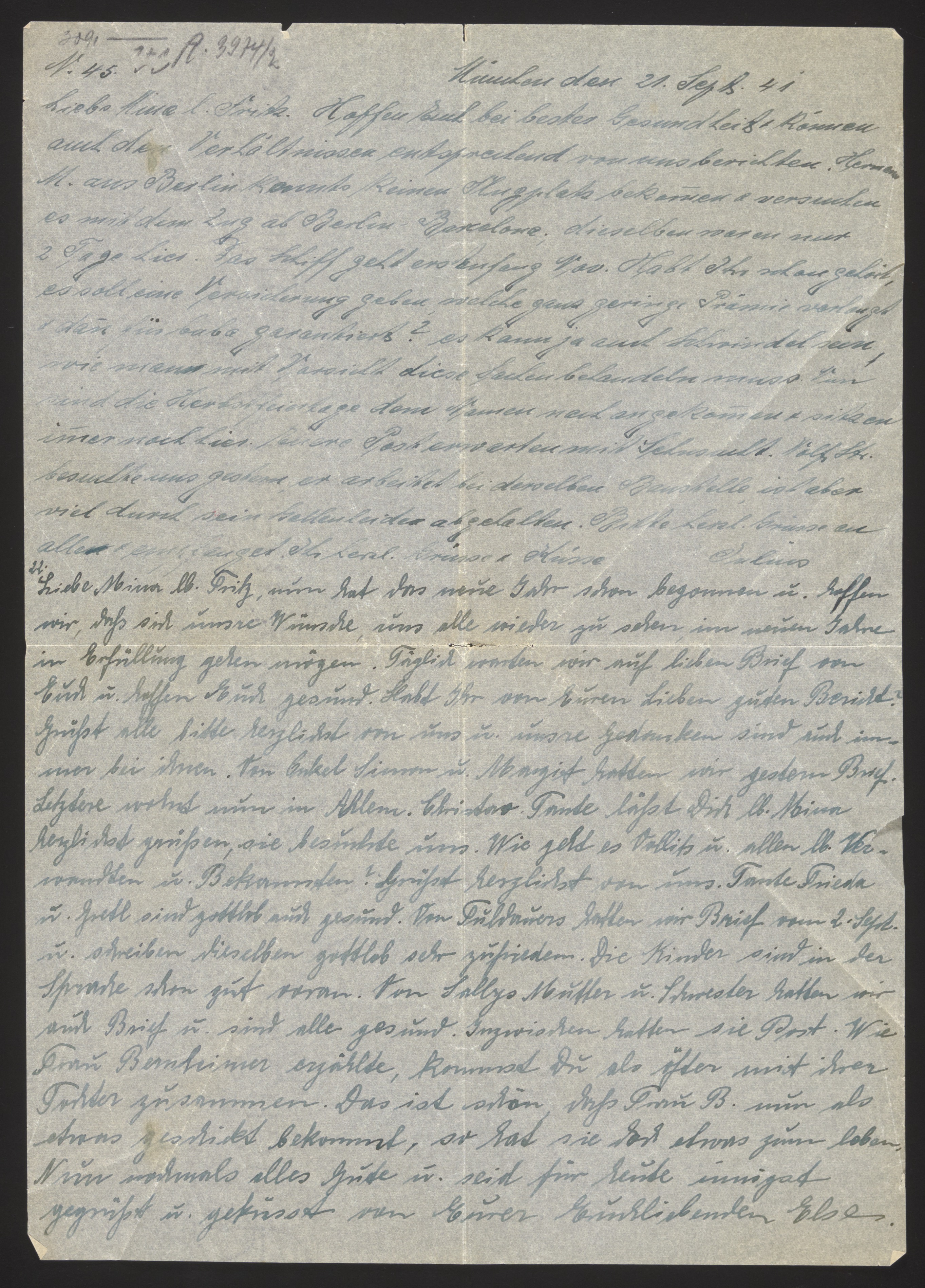
20.09.1941
Elsa writes from Munich — day after Yellow Star order
Letter written September 20, 1941, one day after Yellow Star enforcement began. No direct mention due to censorship. 📍 muenchen
Correspondence (67 documents)
Correspondence (untranscribed)
Transcription needed
Correspondence (untranscribed)
Transcription needed
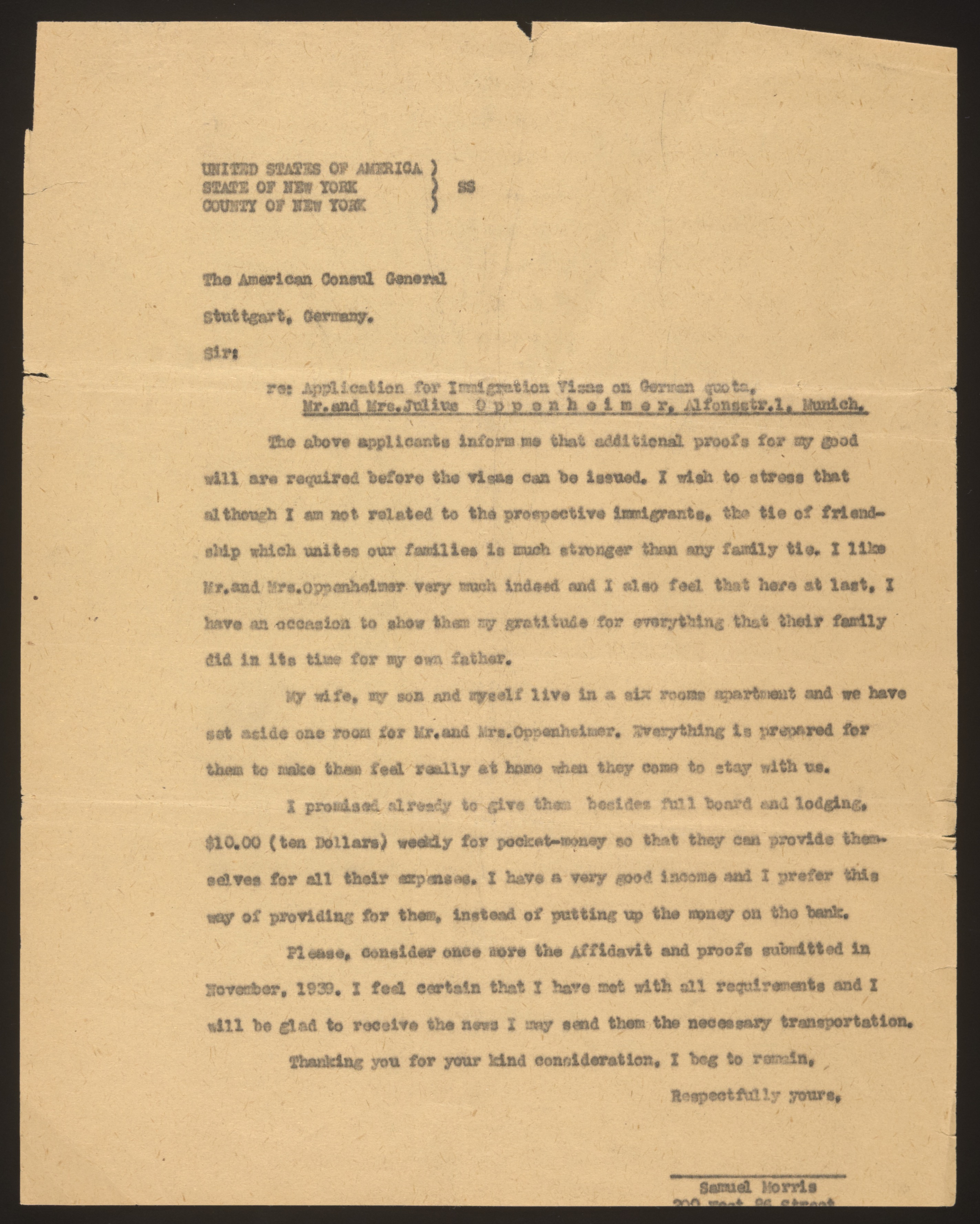
Correspondence (untranscribed)
Transcription needed
Correspondence (untranscribed)
Transcription needed
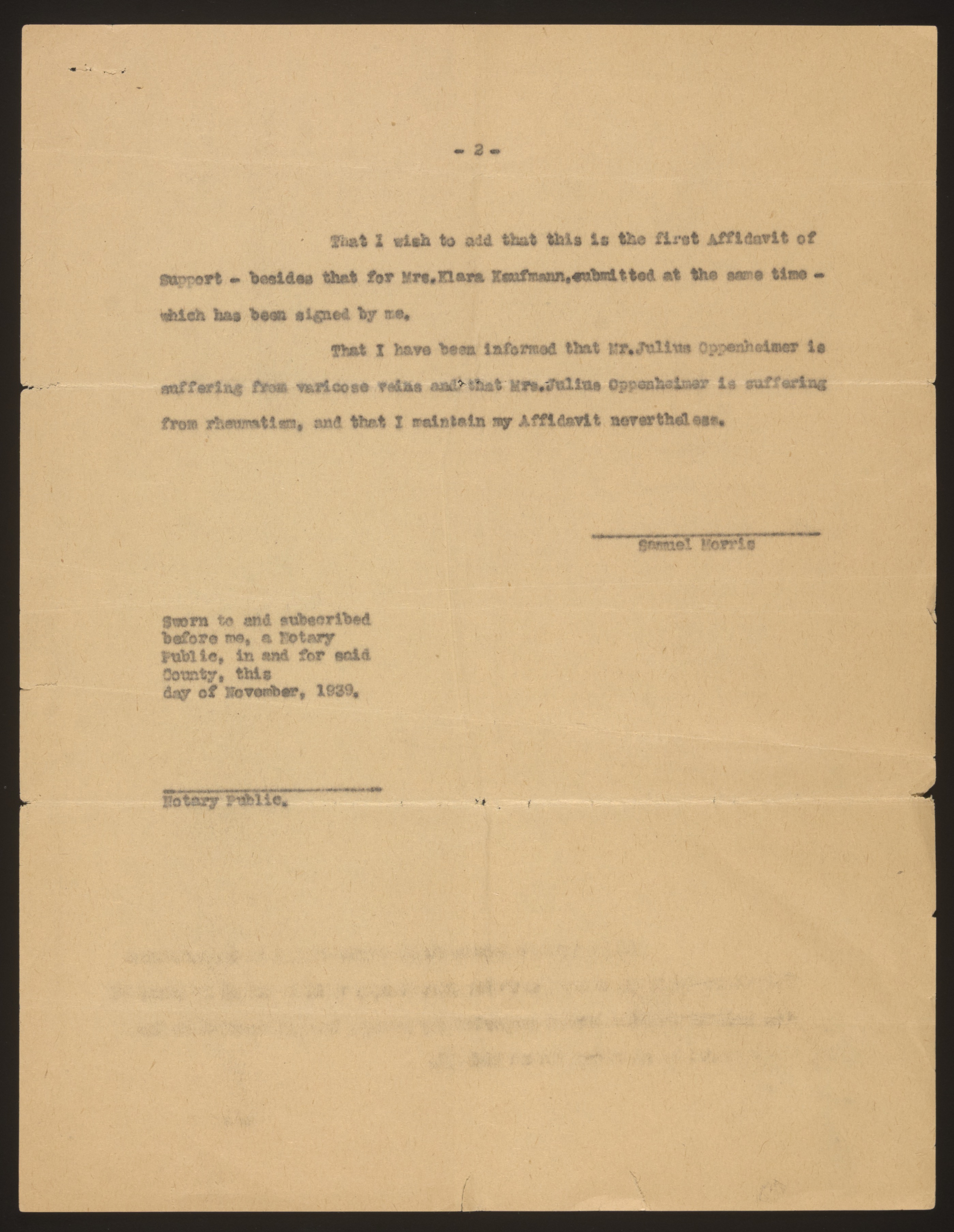
Correspondence (untranscribed)
Transcription needed
Correspondence (untranscribed)
Transcription needed
Correspondence (untranscribed)
Transcription needed
Correspondence (untranscribed)
Transcription needed
Correspondence (untranscribed)
Transcription needed
Correspondence (untranscribed)
Transcription needed
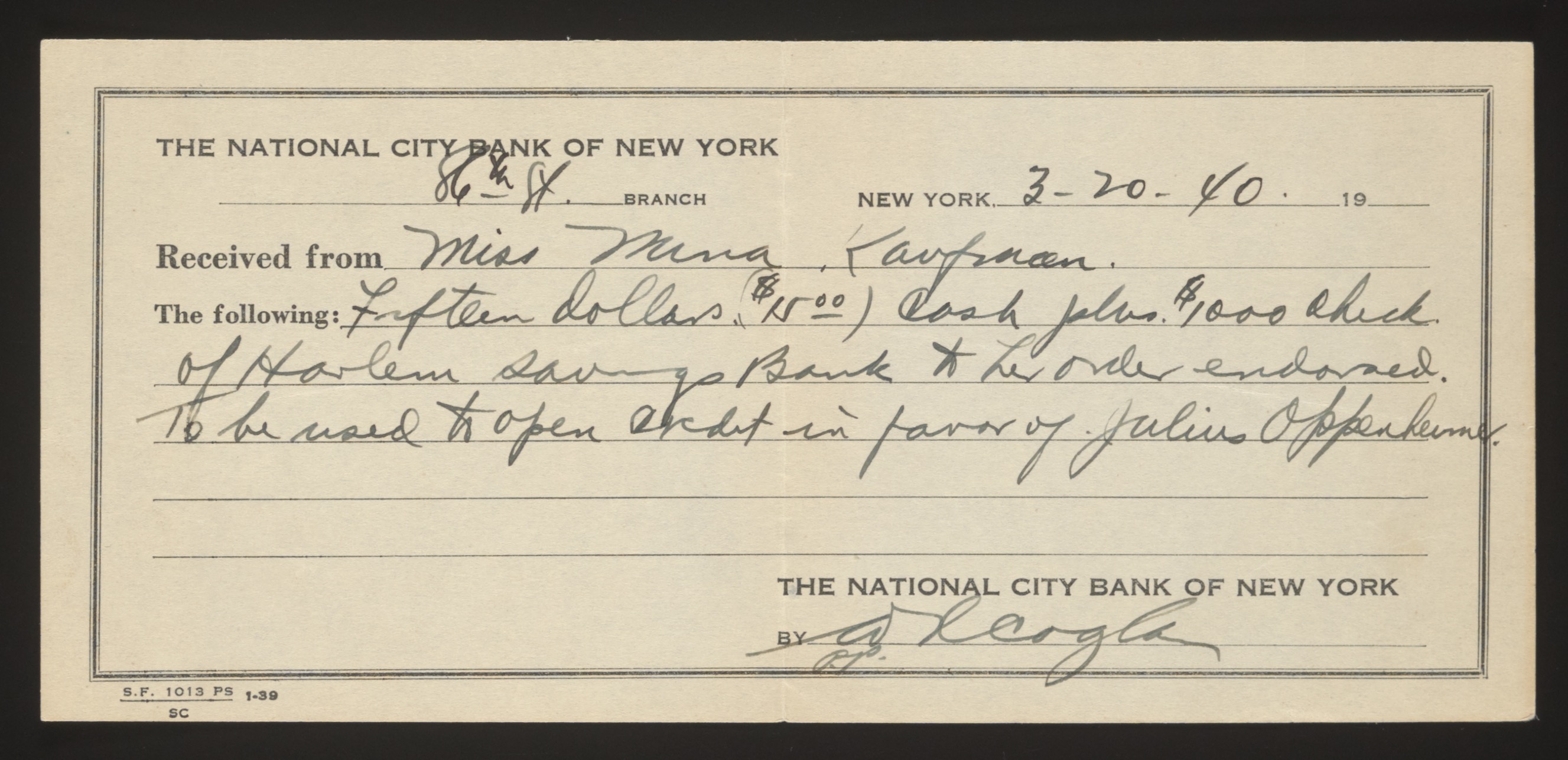
Correspondence (untranscribed)
Transcription needed
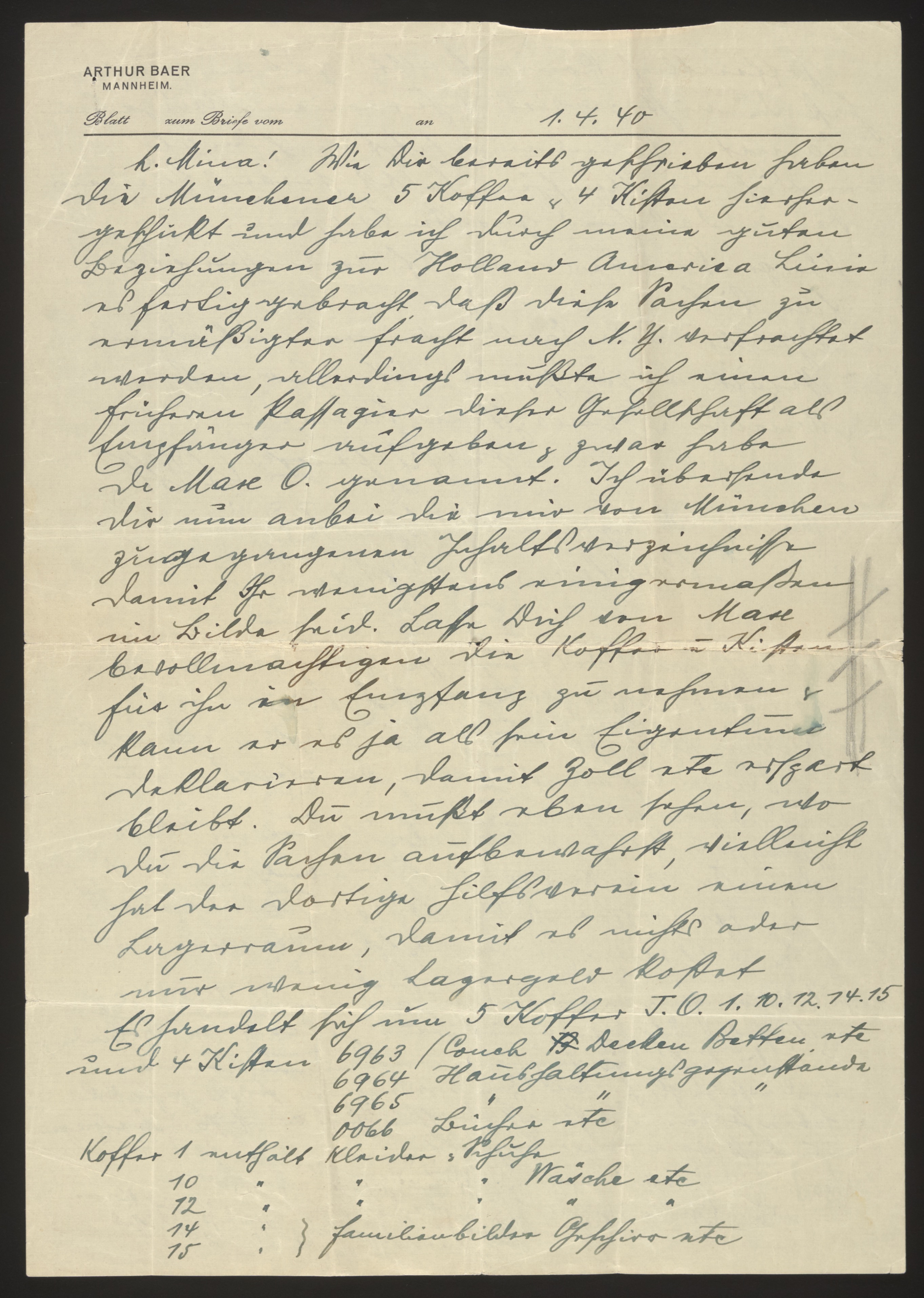
Correspondence (untranscribed)
Transcription needed
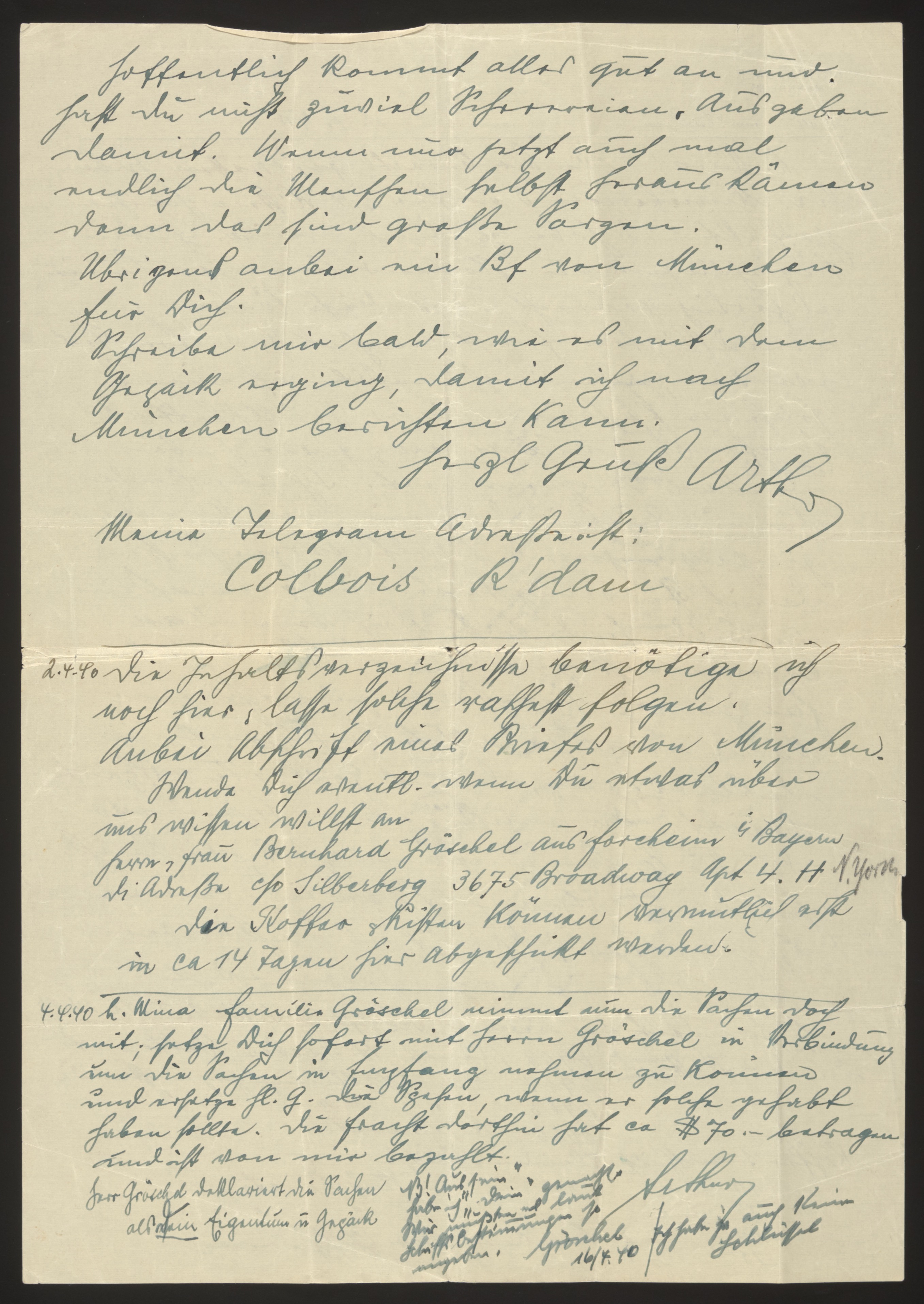
Correspondence (untranscribed)
Transcription needed
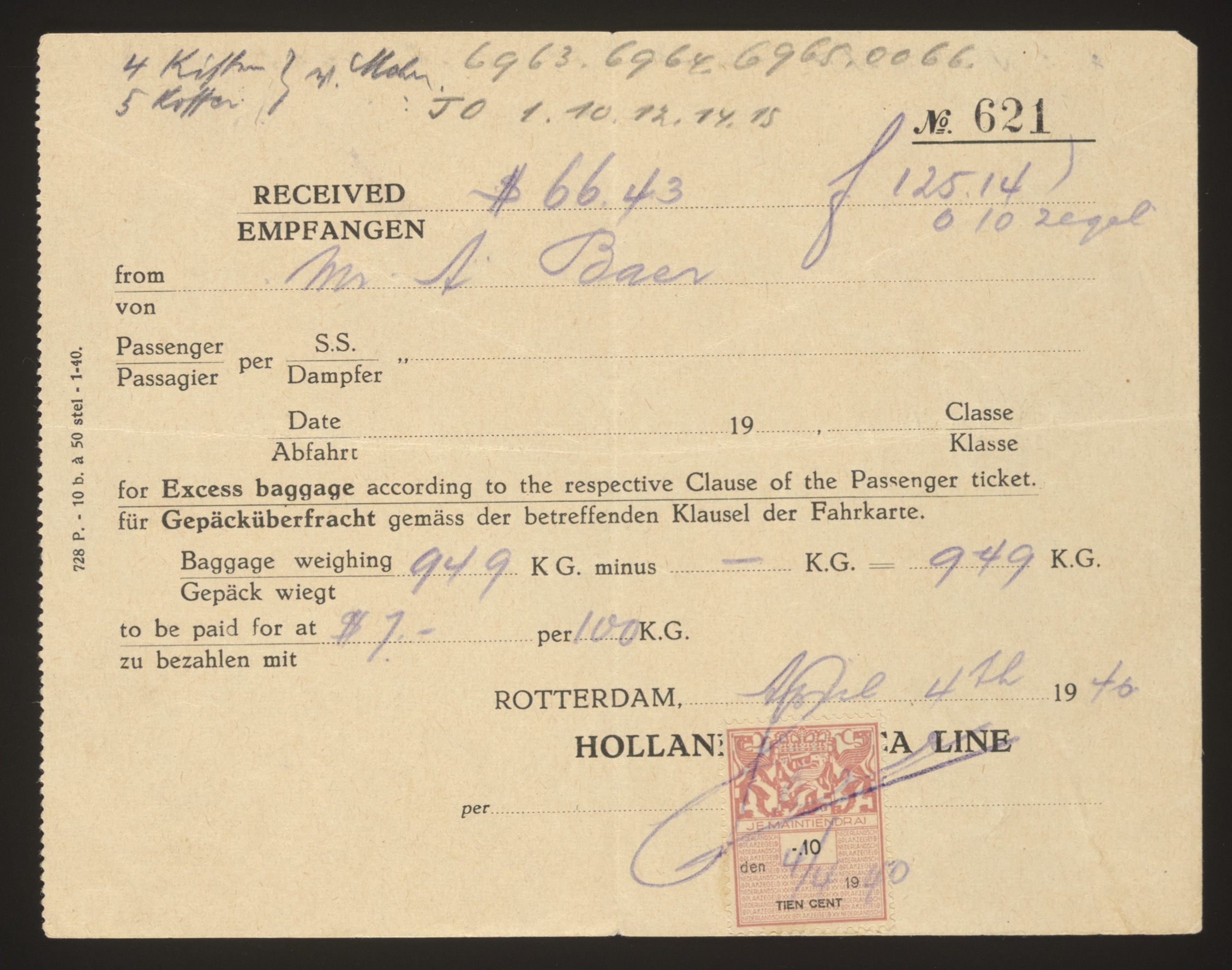
Correspondence (untranscribed)
Transcription needed
Correspondence (untranscribed)
Transcription needed
Correspondence (untranscribed)
Transcription needed
Correspondence (untranscribed)
Transcription needed
Correspondence (untranscribed)
Transcription needed
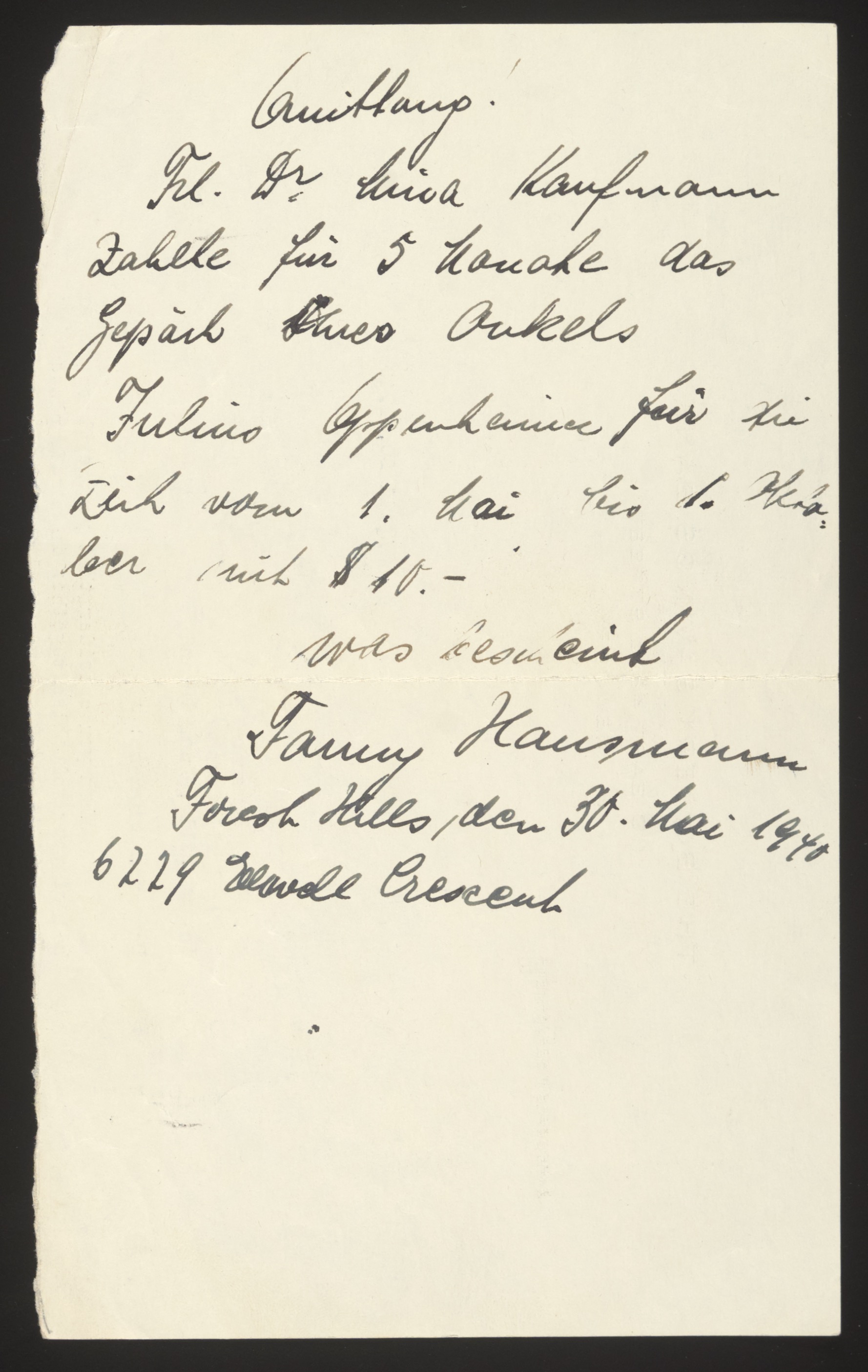
Correspondence (untranscribed)
Transcription needed
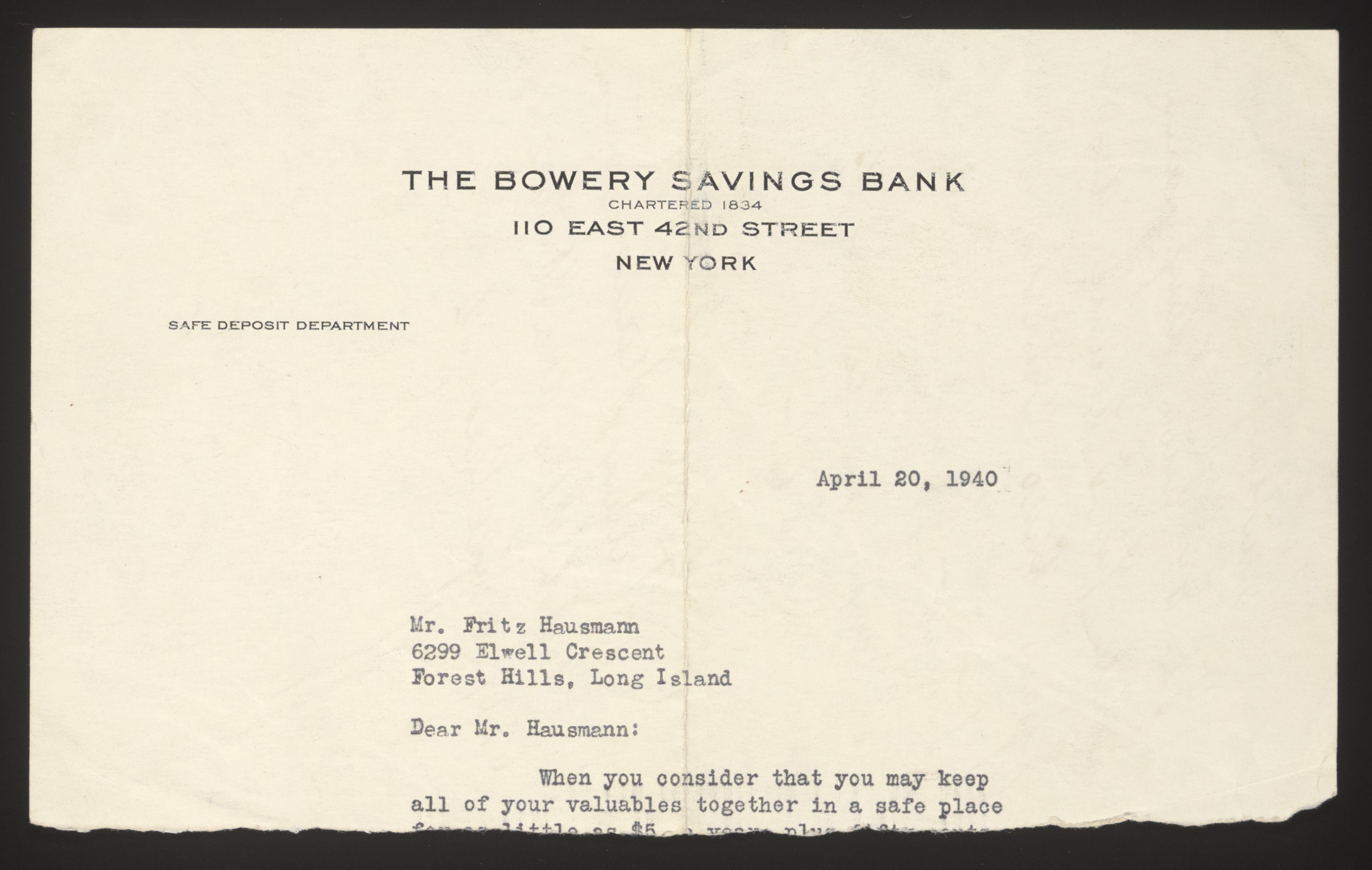
Correspondence (untranscribed)
Transcription needed
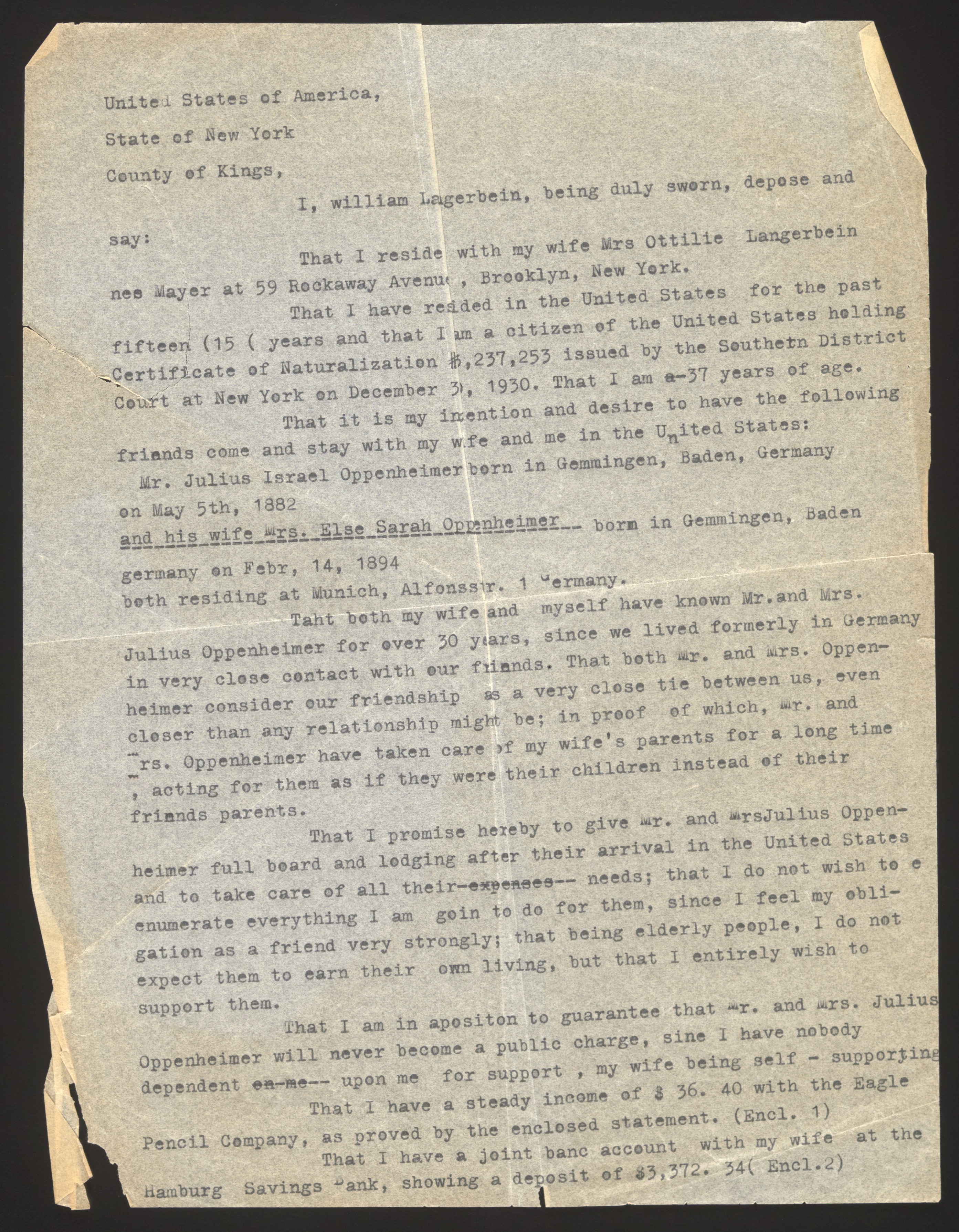
Correspondence (untranscribed)
Transcription needed
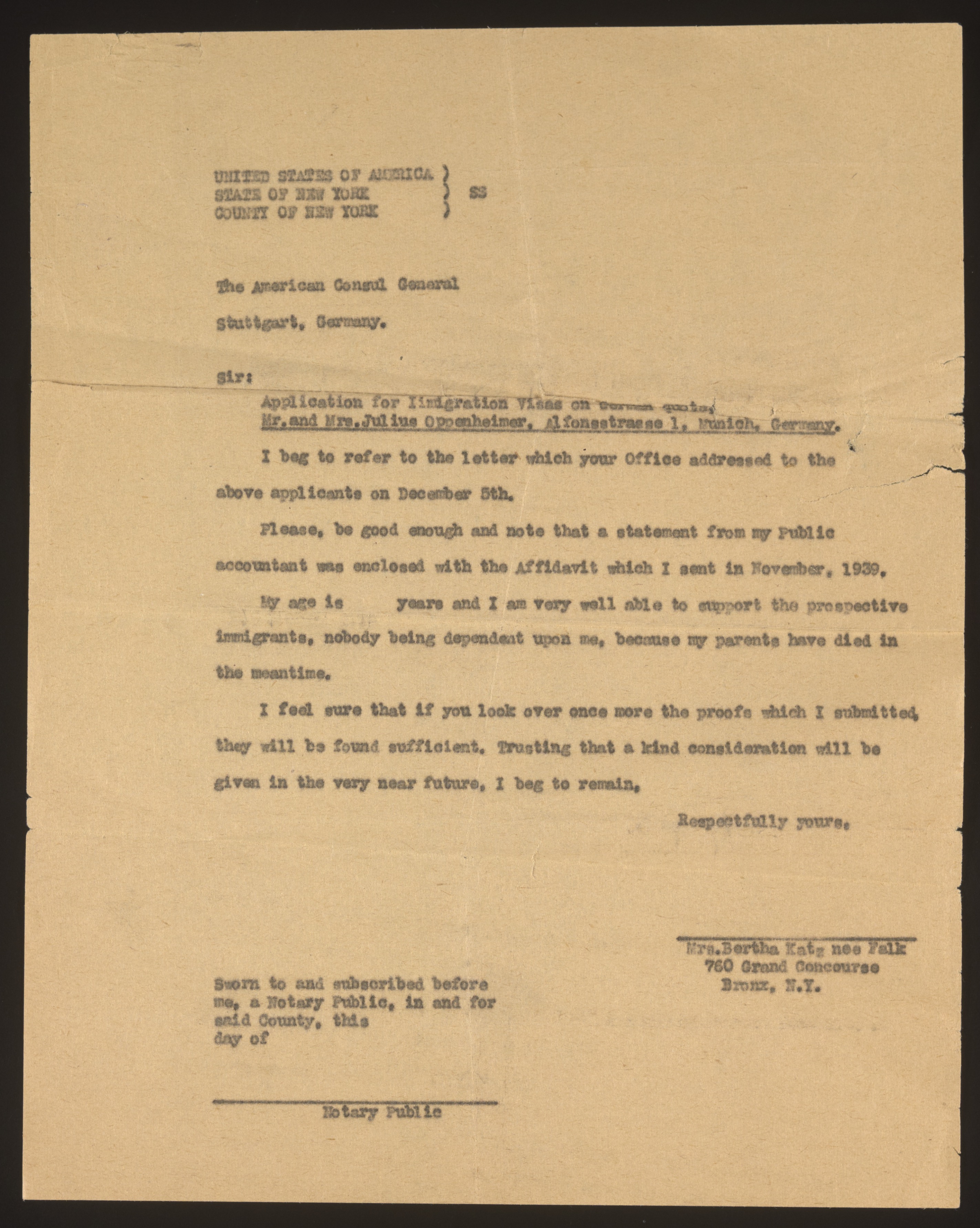
Correspondence (untranscribed)
Transcription needed
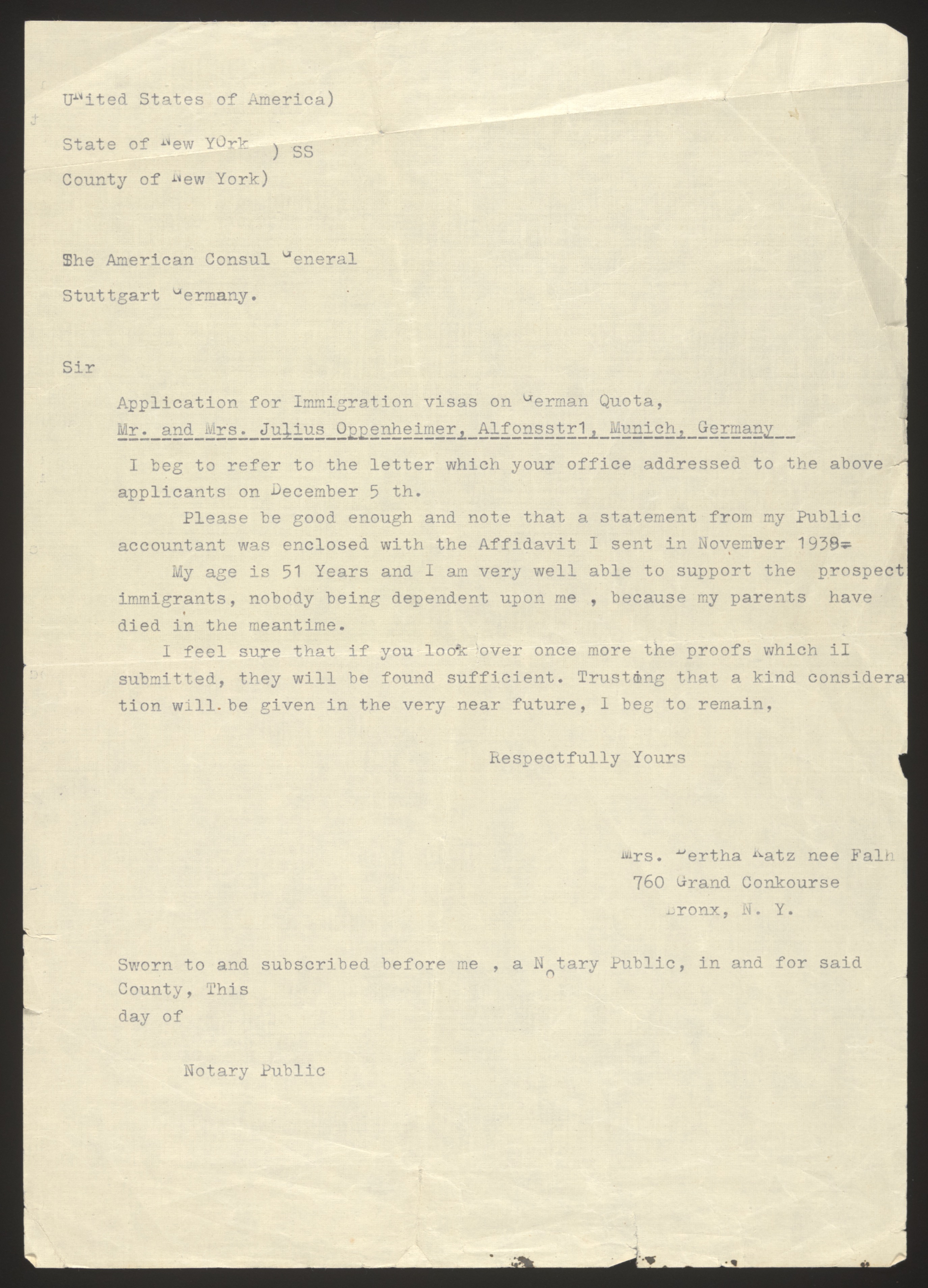
Correspondence (untranscribed)
Transcription needed
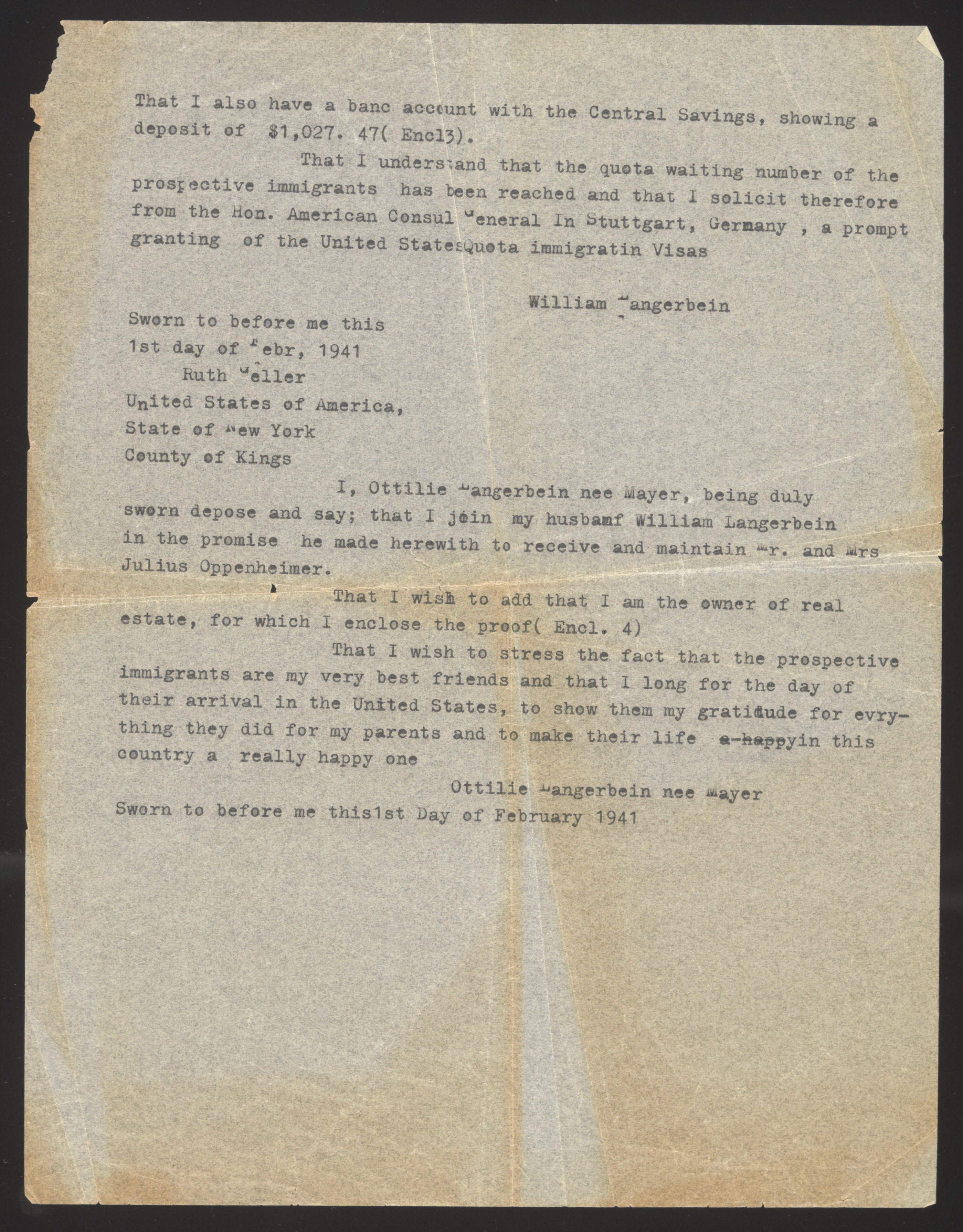
Correspondence (untranscribed)
Transcription needed
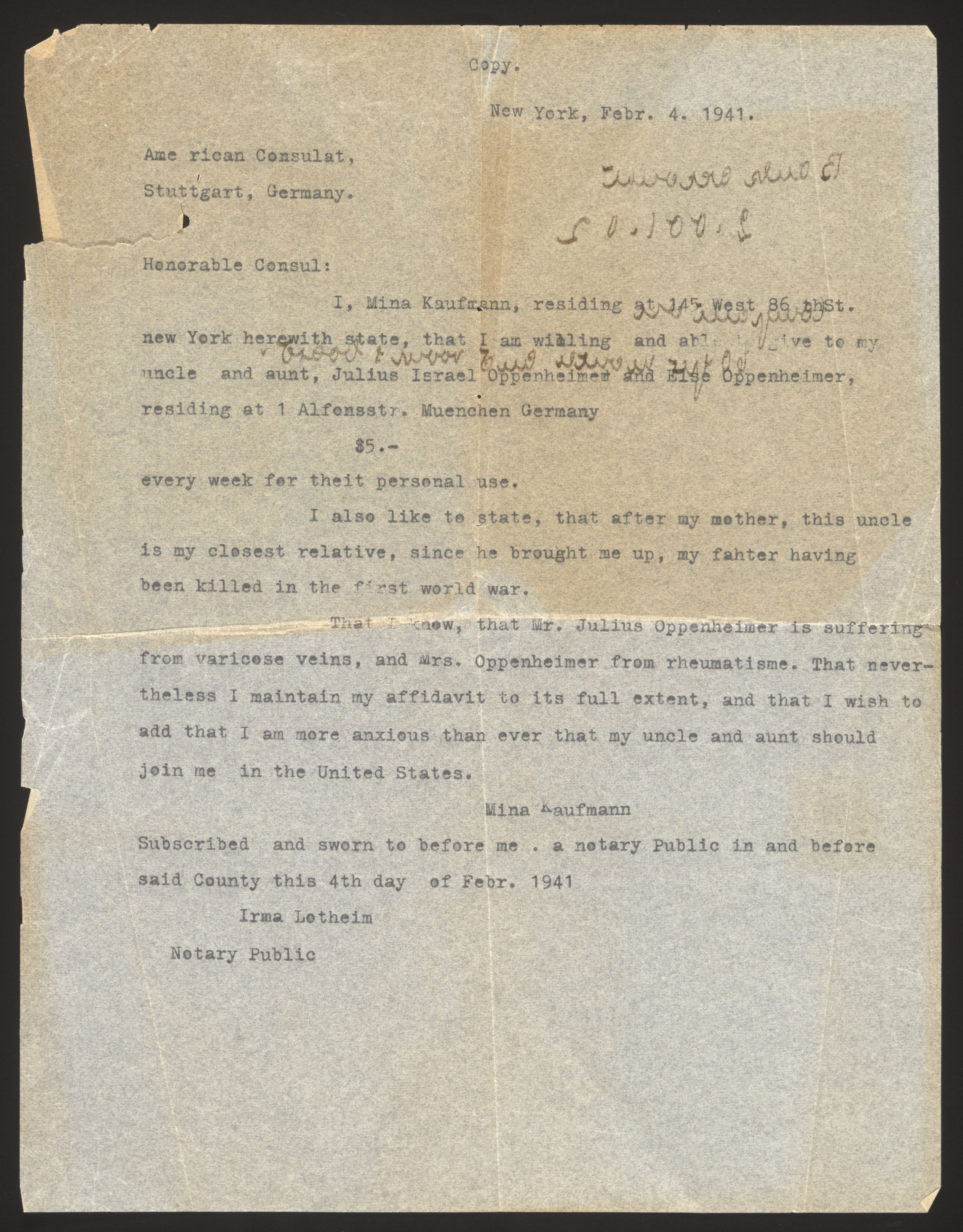
Correspondence (untranscribed)
Transcription needed
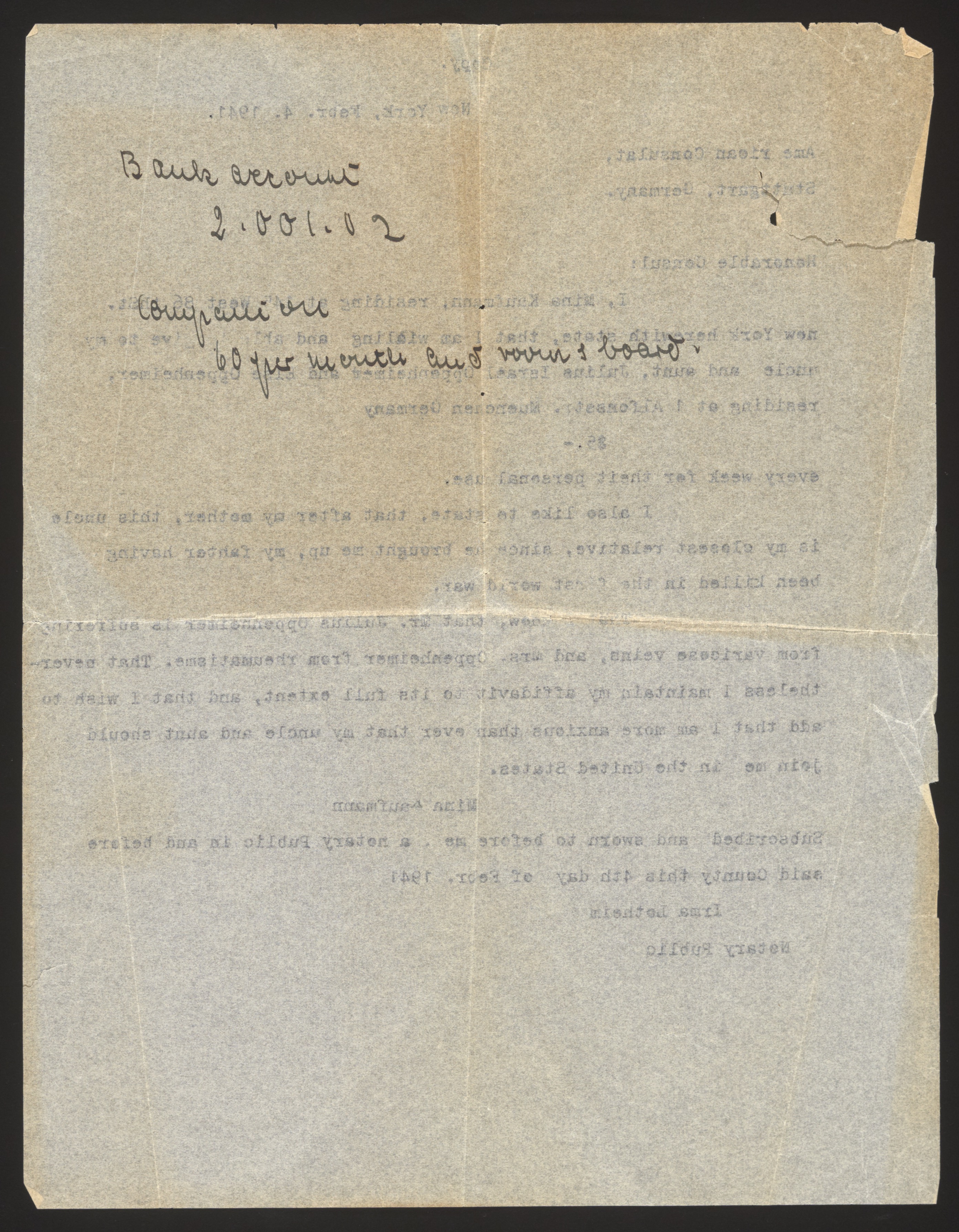
Correspondence (untranscribed)
Transcription needed
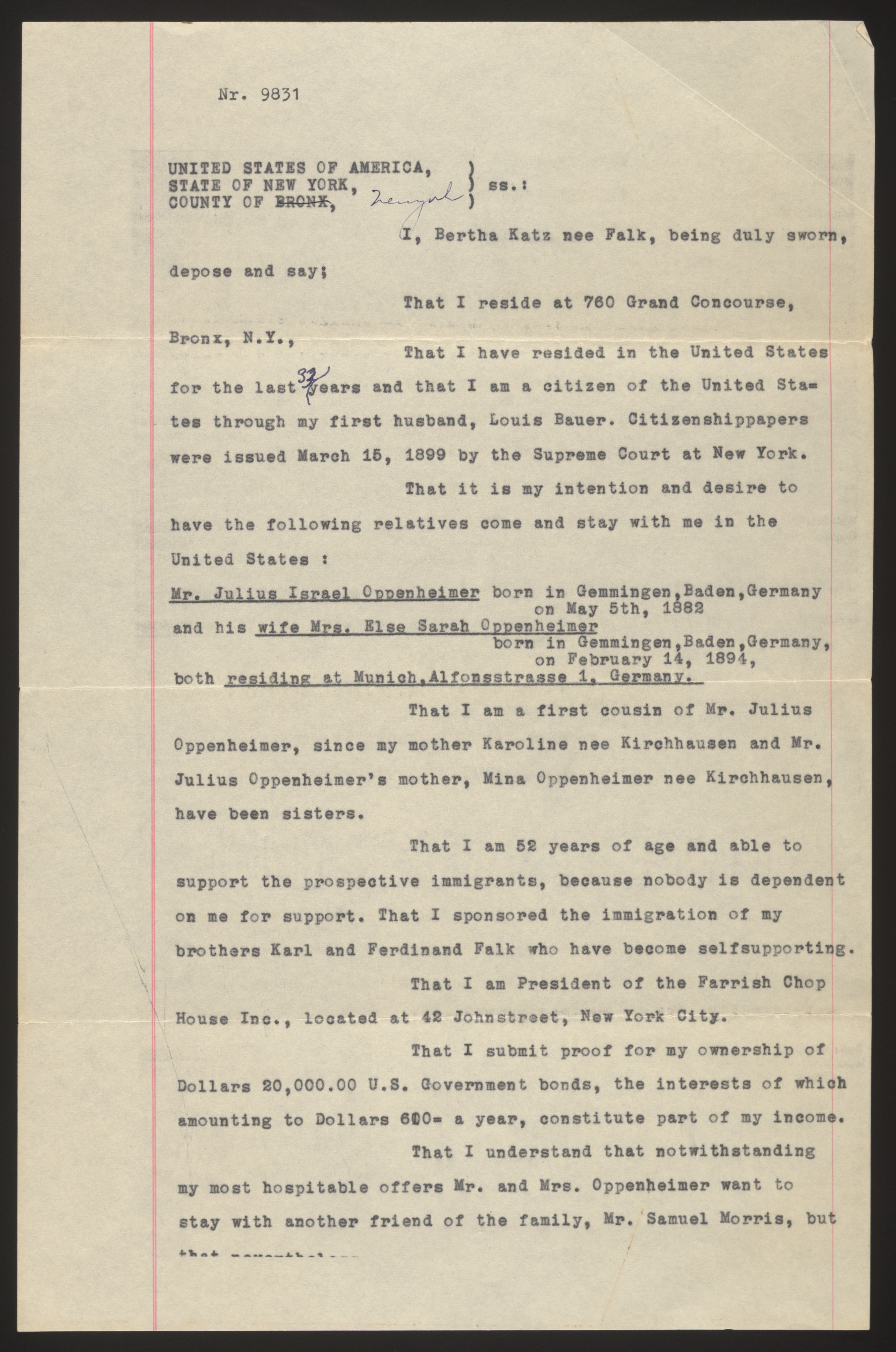
Correspondence (untranscribed)
Transcription needed
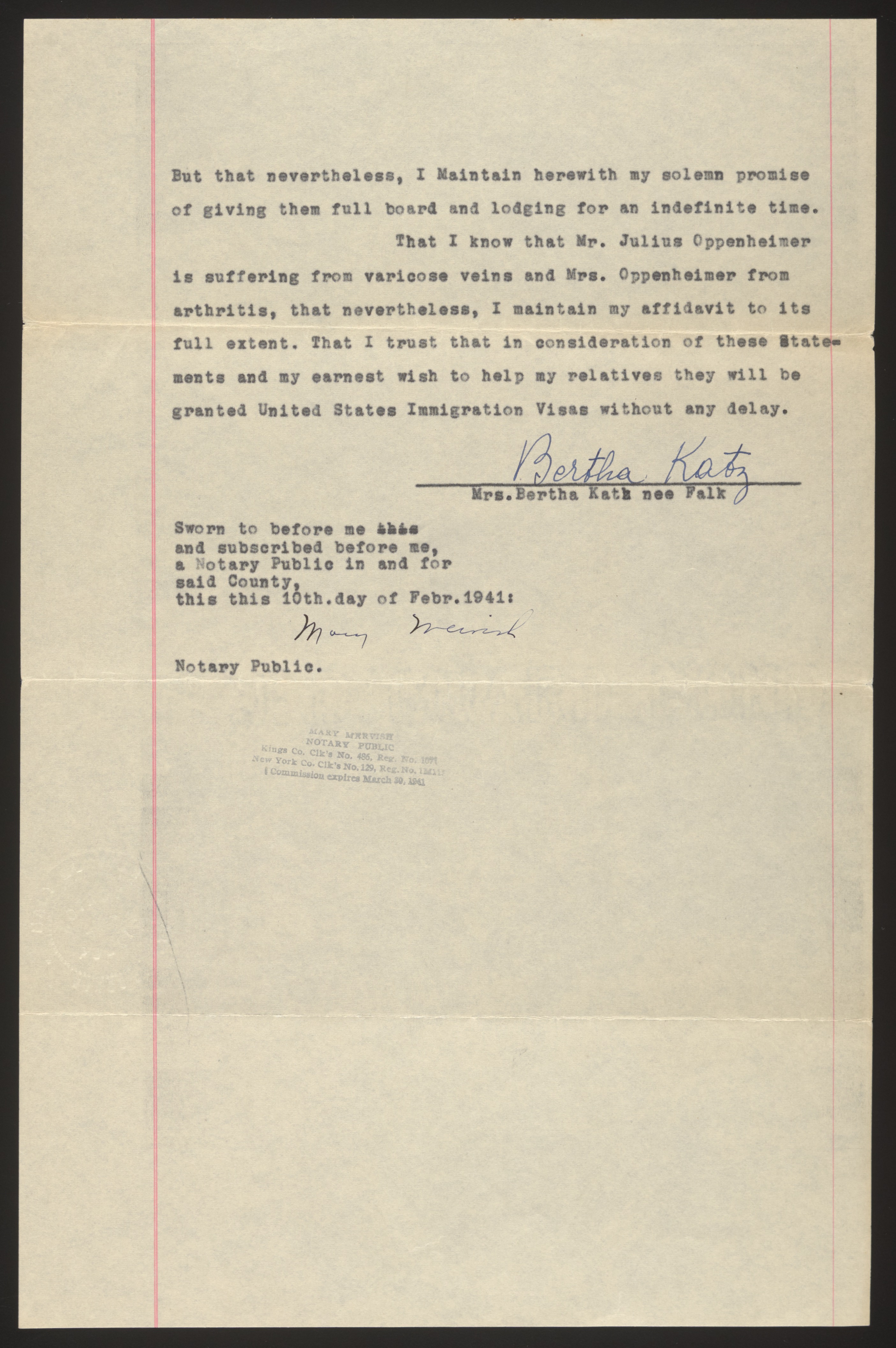
Correspondence (untranscribed)
Transcription needed
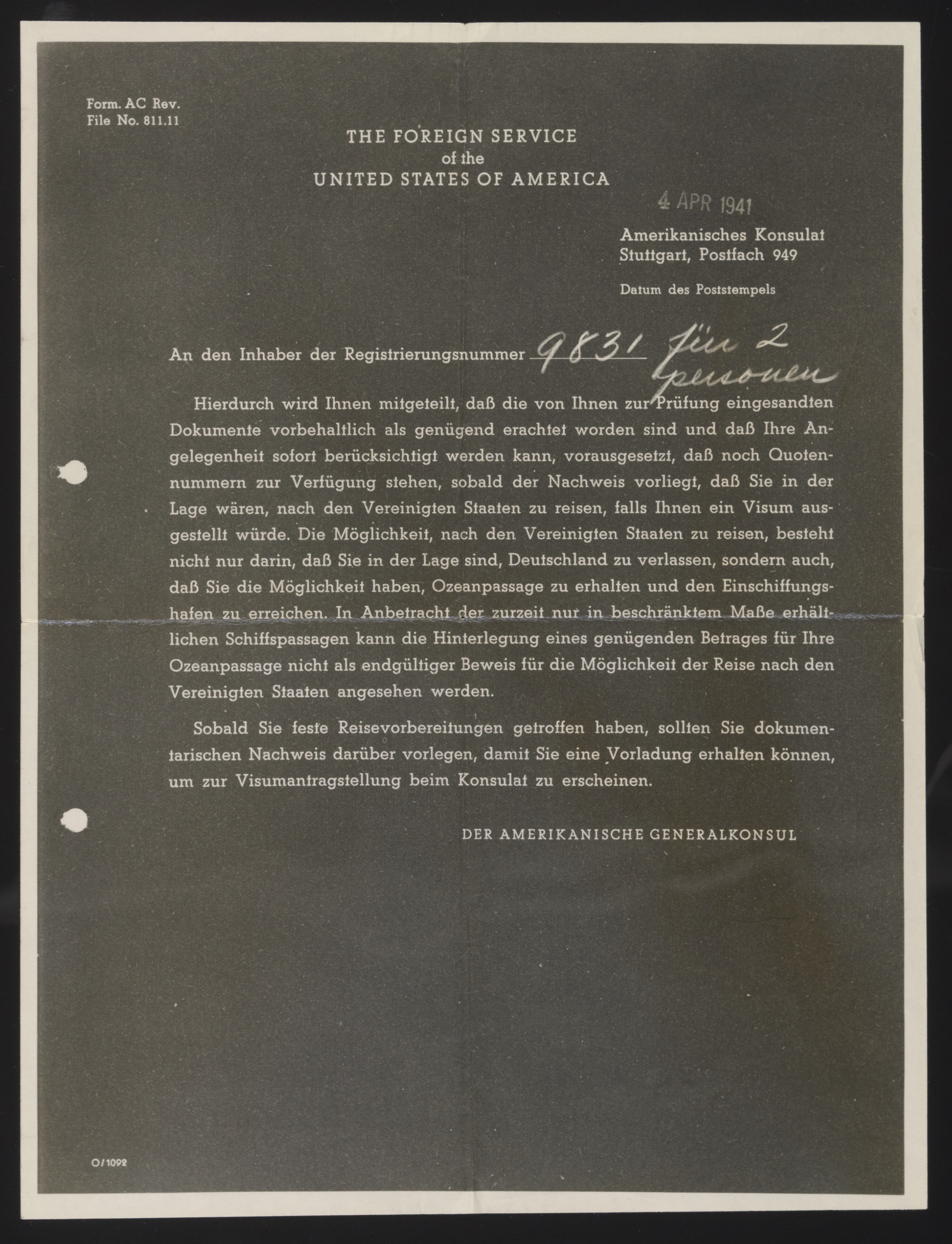
Correspondence (untranscribed)
Transcription needed
Correspondence (untranscribed)
Transcription needed
Correspondence (untranscribed)
Transcription needed
Correspondence (untranscribed)
Transcription needed
Correspondence (untranscribed)
Transcription needed
Correspondence (untranscribed)
Transcription needed
Correspondence (untranscribed)
Transcription needed
Correspondence (untranscribed)
Transcription needed
Correspondence (untranscribed)
Transcription needed
Correspondence (untranscribed)
Transcription needed
Correspondence (untranscribed)
Transcription needed
Correspondence (untranscribed)
Transcription needed
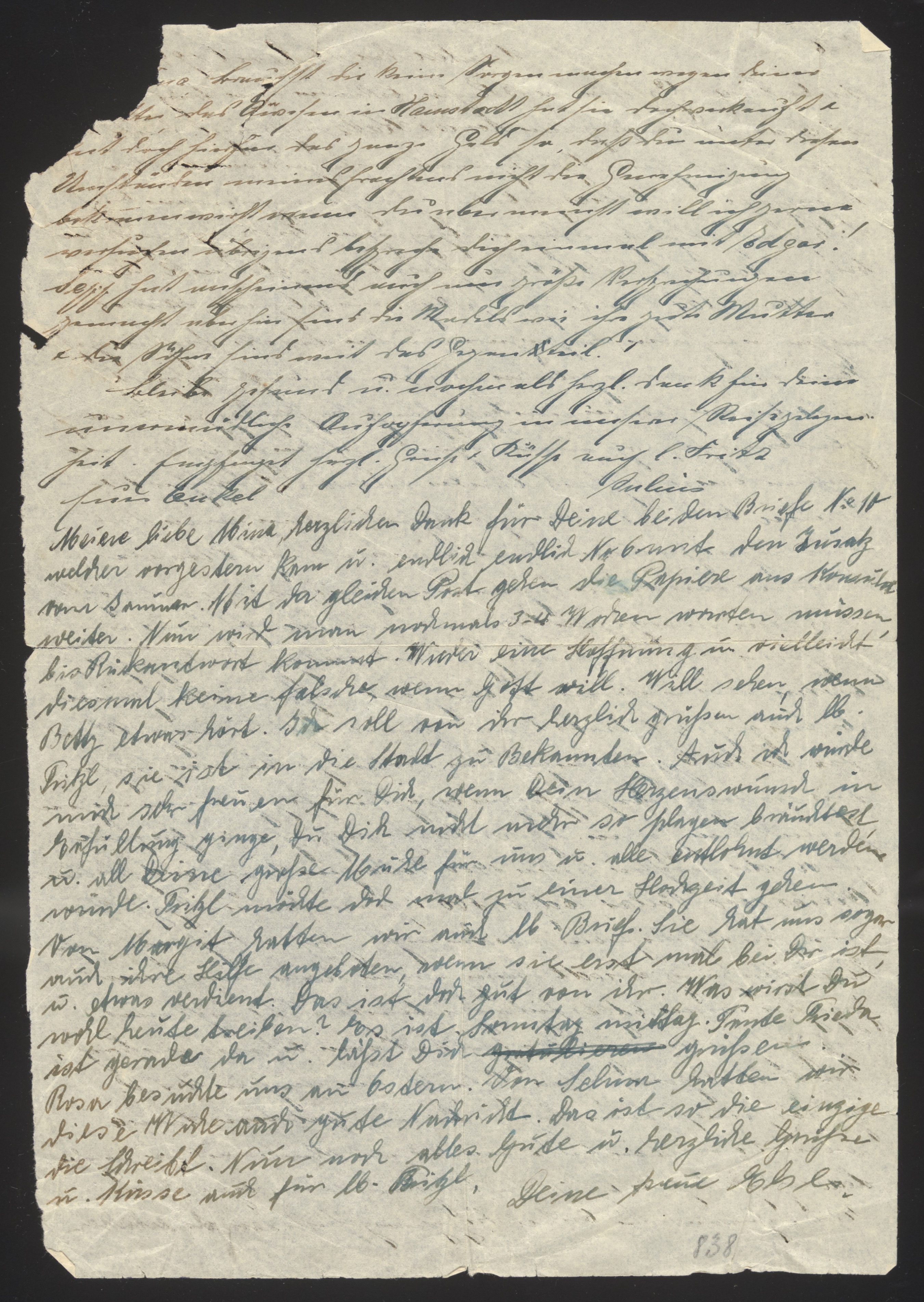
Handwritten letter (page 2 / continuation) in German Kurrent script
0007
Transcribed
[Top section:]
...inquiries about [?] regarding the Danube... waiting... endorsement... in the hope... besides needing an affidavit... Switzerland... registration... for grandfather...
Greetings to you all! Julius
[Second section:]
My dear Mina, heartfelt thanks for your dear card, which arrived delayed... I wanted to give you the report from Aunt Margit [who came?] from Hannover... One is constantly being admonished... My library [will come?] — perhaps this time there is hope. No celebrations... Would you still want to [send] something to Bette... [who] should be greeted... letters... to get around the city... means of transportation...
Your Thekla
[Top section — continuation:]
[?] müsste bei mir Bezüge [?] anfragen wegen Donau [?] für das Warten in Hausfrauli [?] hat [?] Indossement [?] ... [?] ist bis jetzt [?] in der Hoffnung [?] immer [?] und nur [?] die Rampung ... [?] Ausserdem braucht [?] bei ihm ein Affil [?] Lienz [?] ... das [?] fein u. [?] Schweiz [?] ... [?] Dein [?] auf feine Hin u. [?] Schweiz [?] für die Meldung [?] für Grossvater [?] ...
Grüsse Euch! Julius [?]
[Second section — different handwriting:]
Meine liebe Mina, herzlichen Dank für Deine lb. Karte [?] über welcher verschoben kam u. [?] und [?] wollte möchte ich Dir den Bericht der Tante Margit der [?] aus Hannover heraus [?]. Man wird weiter ermahnt und [?] wird werden. Meine Bibliothek kommt [?] eine Hoffnung in vielleicht diesmal. Keine Feierlein [?] gibt sich. Willst du denn Bette etwas noch [?] die soll am [?] Teil empfangen grüssen und [?] Briefe sie Zahl um die Stadt zu bekommen. [?] würde ich [?] für sie [?] einen beiden Bewegungsmitel in Beschlag genug zu Hilfe [?] wohl [?] ... [?]
Deine [?] Thekla
This page reveals the multiple threads of concern: emigration paperwork (affidavits, Switzerland as a transit route), family members scattered across Germany (Aunt Margit from Hannover), restricted movement and living conditions, and the effort to maintain family bonds through letters. The mention of "Bibliothek" (library) may refer to attempts to ship personal possessions.
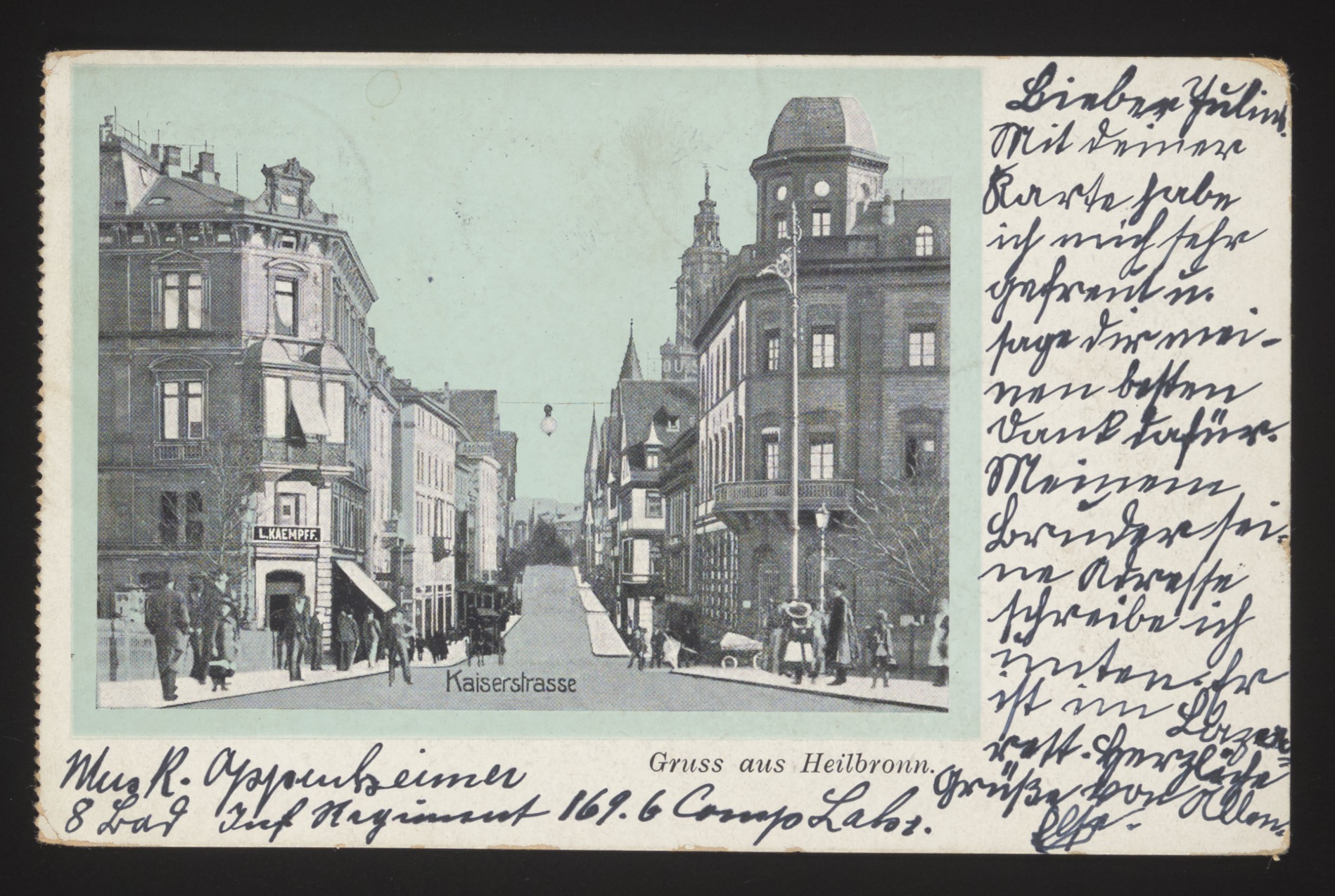
Picture postcard front
1900
Transcribed
None
[Handwritten in Kurrent script along the left margin and top; partially legible]
Mag. R. Oppenheimer [?]
[Several lines of Kurrent script — content appears to be brief personal greetings typical of a postcard]
None
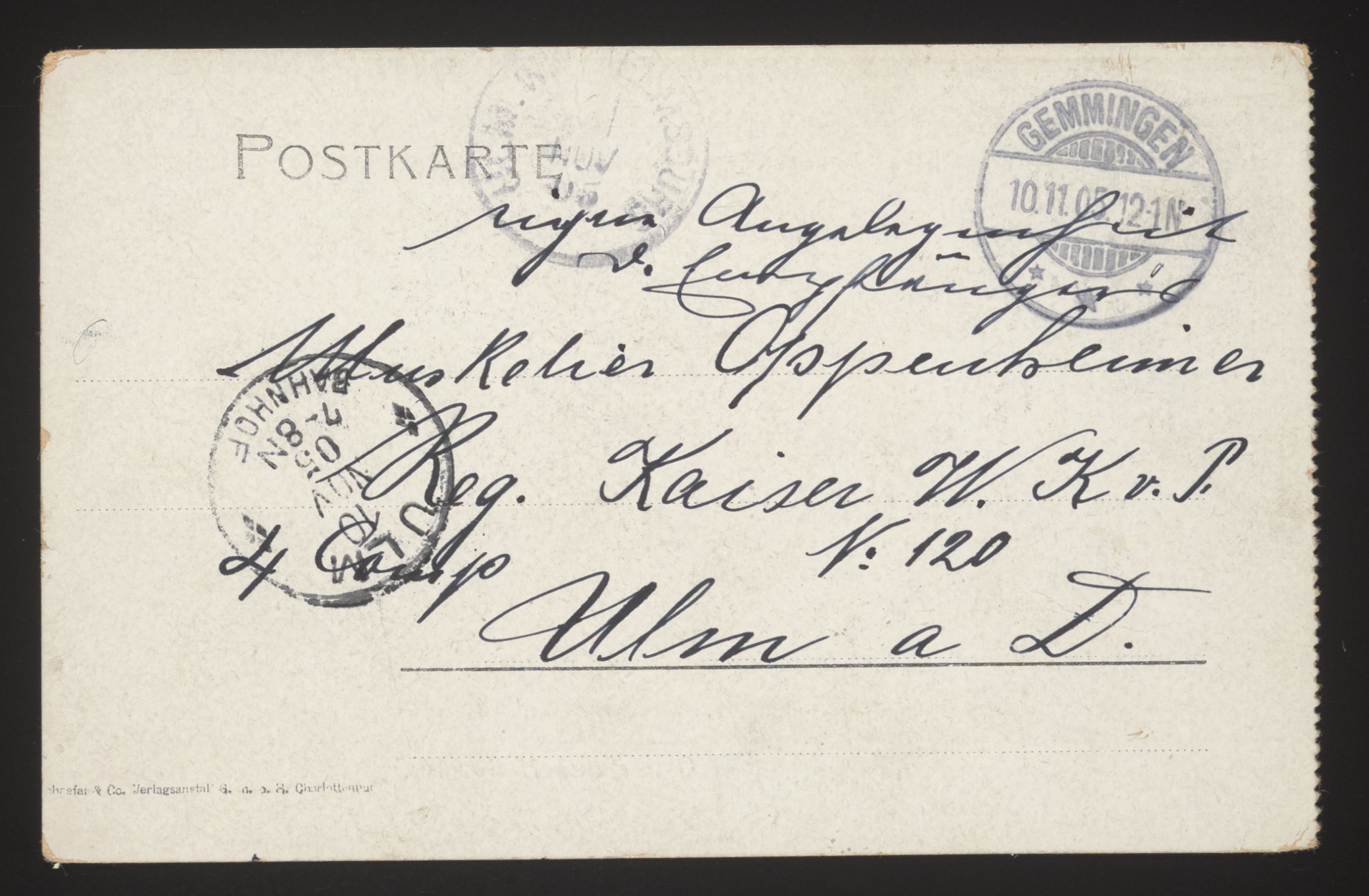
Picture postcard back (address side)
1900
Transcribed
Address side of postcard. Printed heading "Postkarte" at top. Postmark visible from Heilbronn [date partially legible]. Addressed in handwritten Kurrent script to:
Fräulein Angela [?] Oppenheimer
[c/o?] Kaiser W. Karl [?]
Ulm a. D. [Ulm an der Donau]
None
None
Handwritten letter (page 1), in German Kurrent script
15.06.1930
Transcribed
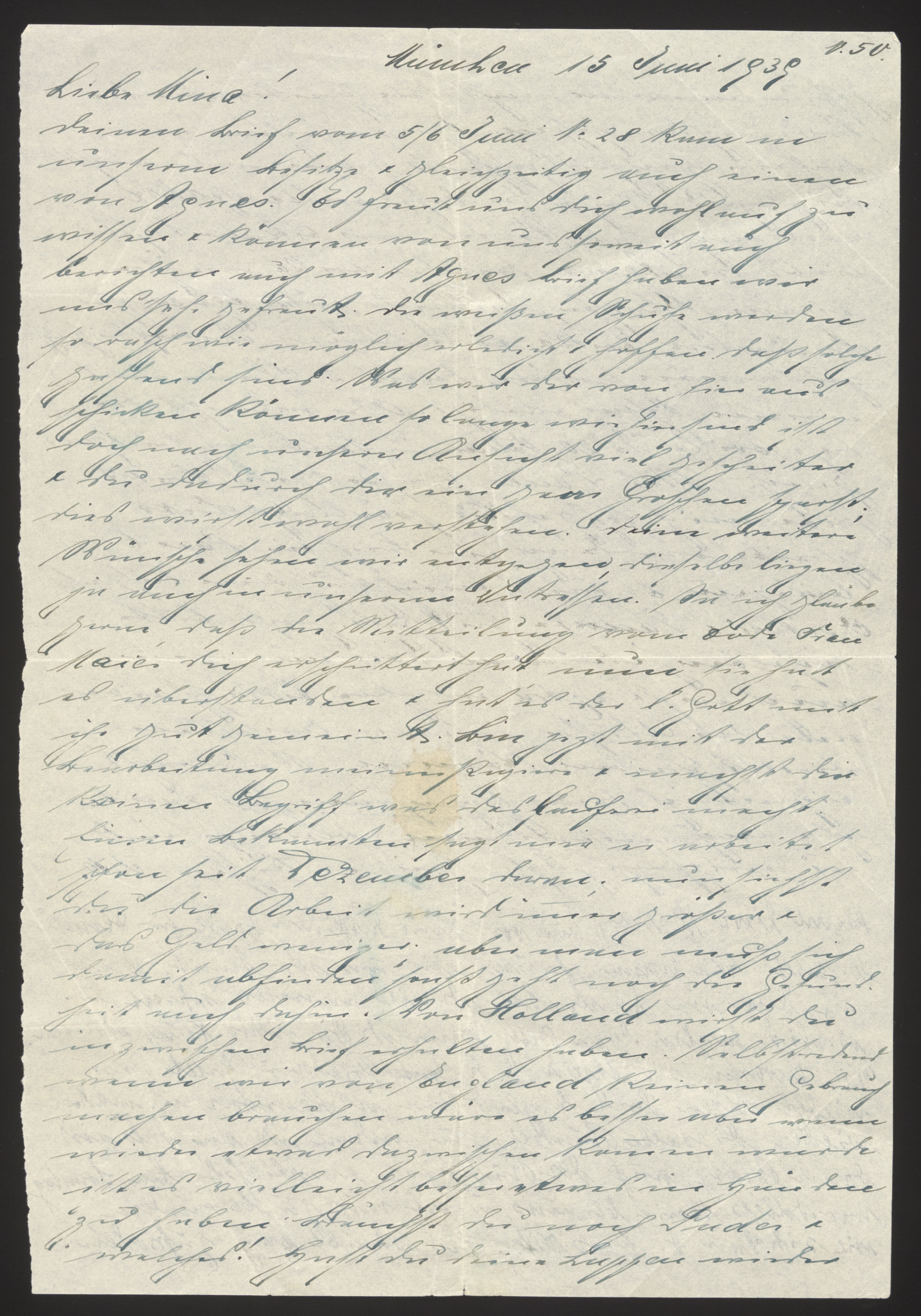
Munich, June 15, 1930
Dear Mina!
Your letter of June 6 [was received]... [The letter discusses personal and family matters, including travel plans, mentions of acquaintances, discussion of work/employment, and references to Holland. The writer appears to be updating Mina about various family members and personal circumstances. Many specific details cannot be deciphered due to the Kurrent handwriting.]
München 15 Juni 1930
Liebe Mina!
Deinen Brief vom 6/6 habe [?] 24 [Tage?] mit einigem [?] plötzlich und [?] immer aber [?] ich [?] [mehrere Zeilen in Kurrent, schwer zu entziffern] ... wollen u. können von [?] kam u. [?] kaufen und mit [?] Briefe das war mit [?] u. [?] Grüsse [?] ... sofort [?] möglich ... ich [?] Hoffnung [?] kam u. [?] was hier [?] Gastes kommen zu tun ... [?] auf welchen [?] Briefe [?] höflichst [?] u. [?] das [?] was [?] grüsst hier und kommt mit [?] einen lieben Wünsche [?] uns [?] ganz [?] vielleicht sogar zu [?] vielleicht versprenn [?] ich [?] da [?] die Mitteilung man [?] Frau Marie [?] aufgefasst hat [?] über die [?] ... nicht ohne [?] Treue u. ganz [?] u. ist ist [?] wird [?] die Pension [?] ... u. komme [?] einen Münch und [?] Tochter [?] meines [?] machen [?] in [?] auf [?] gern seit 10 [?] bin ... mag [?] über die Arbeit nachkommens [?] ... u. [?] ...
Von Holland und [?] die [?] kenner [?] angezeigt von [?] Feldpost [?] dienst ... auch von mir einmal früheren [?] ... und [?] ... weitere [?] [?] von wie [?] ...
[Multiple additional lines in Kurrent script, largely illegible at this resolution]
None
Handwritten letter (page 2 / continuation)
06.1930
Transcribed
[Top: continuation of previous letter — discusses writing, travel plans, and errands]
Greetings and kisses M.B. [?]
[Second note:]
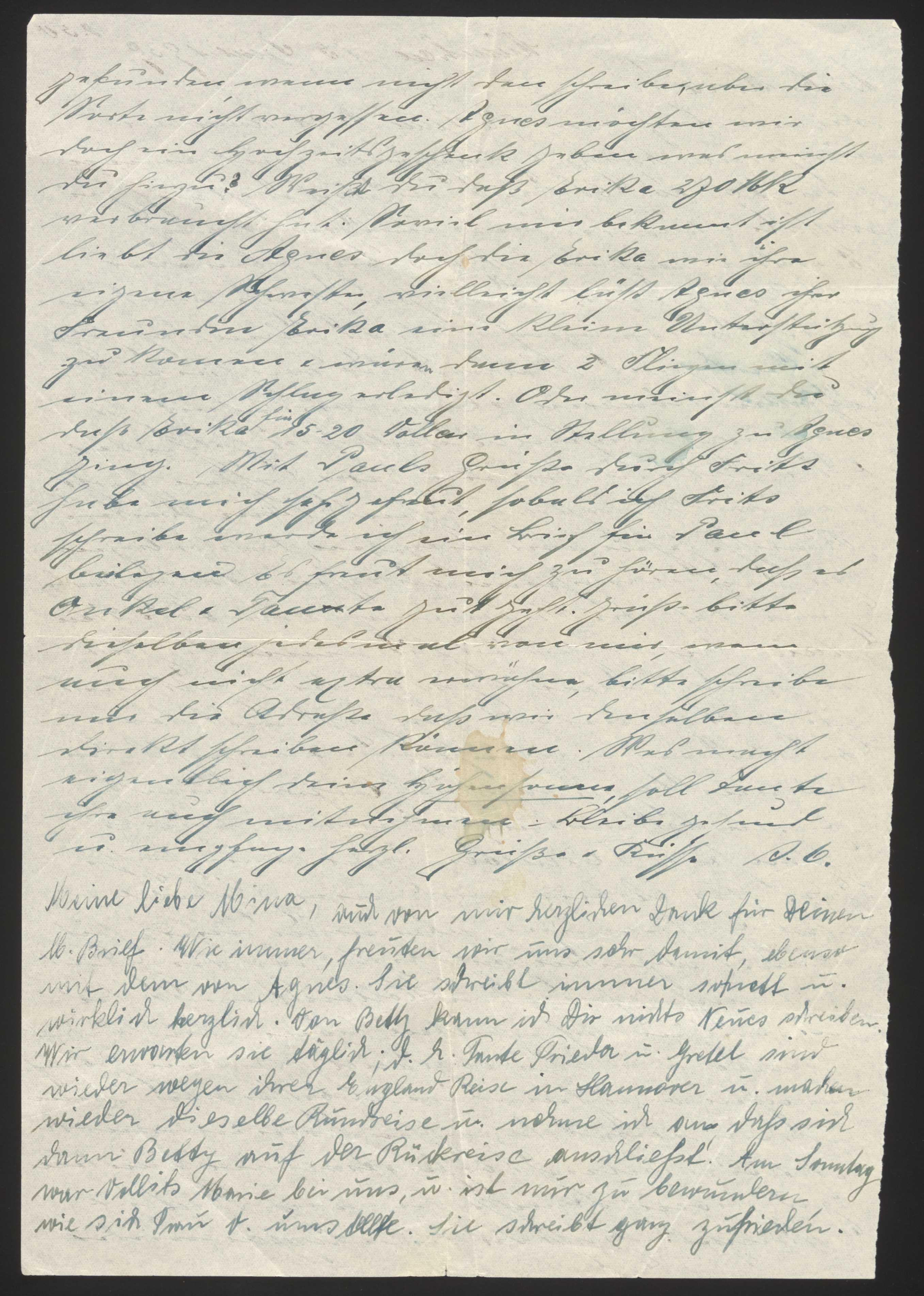
My dear Mina, and from me also heartfelt thanks for your dear letter. As always, we are very [glad?]... The letters always arrive quickly and punctually. From Sally [news]... Remember Aunt Frieda and [try] again about the passport in Hannover and further... You should [?] reside in [?]... that Betty joins on the return journey. On Sunday, Roselie's [daughter/relative] Mane was with us, and [visited] in Semmering where she is very [happy]. She seems quite content.
[Top portion: continuation of letter from 0003]
geschrieben [?] muss [?] über [?] begeben die Woche [?] mit [?] nehmen ... [multiple lines in Kurrent] ...
Grüsse u. Küsse M.B. [?]
[Second note, different handwriting:]
Meine liebe Mina, und von mir herzlichen Dank für Deinen lb. Brief. Wir immer, sehen wir mir sehr [?], denn wir [?] um in [?] die Briefe immer schnell u. pünktlich begleich. Von Sally [?] es Dir nichts [?] drücken [?] ... errinnere [?] Tante Frieda u. [?] nur wieder wegen doch u. [?] Pass in Hannover u. weiter [?]. Du sollst Mundige [?] wohnen in [?] dass ein [?] Betty auf die Rückreise anschliesst. Am Sonntag war Roselies Mane bei uns, u. ist mir [?] in Semmerin mit sie sehr [?] v. [?] wohle. Sie steht ganz zufrieden.
This page contains the end of the letter from 0003 and an additional note from another family member (possibly Elsa Oppenheimer). The mention of passports and Hannover suggests early discussion of emigration logistics. Betty, Sally, Aunt Frieda, and Roselie are mentioned as family connections.
Handwritten letter discussing shipping of belongings, with inventory
1940
Transcribed
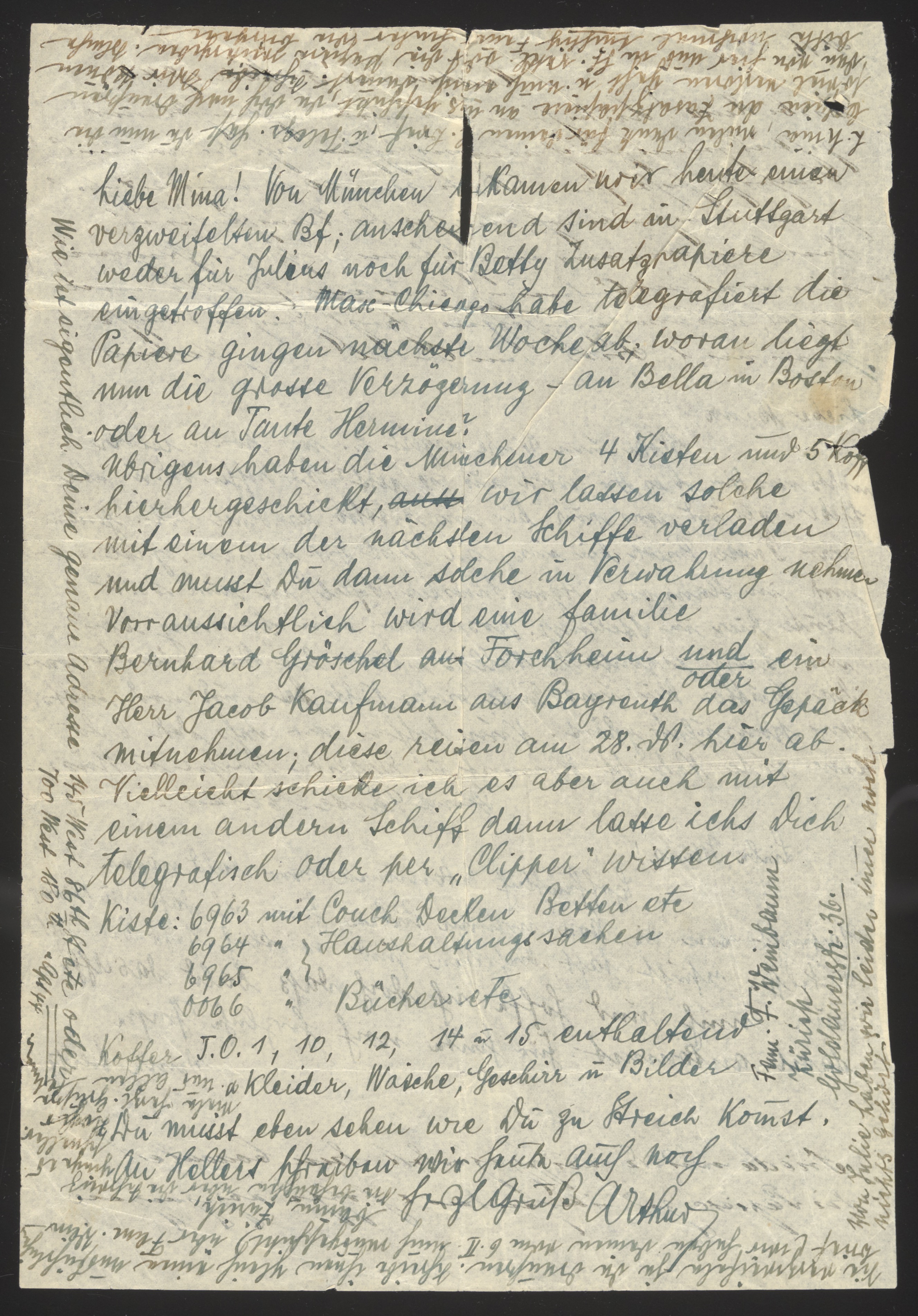
Dear Mina! From Munich we received a desperate letter today, and in Stuttgart still nothing for Betty's passport photographs has arrived. [Someone] telegraphed this week that the journey would depart next week — what is causing the great delay — Bella in Boston or Aunt Hermine?
By the way, the Munich [relatives] have sent 4 crates and 5 kg here, and we will have them loaded on one of the next ships, and you will then need to take them into storage. A family named Bernhard Göschel from Forchheim and a Mr. Jacob Kaufmann from Bayreuth will presumably bring the luggage or take it along; they depart on the 28th. Perhaps it will be sent on another ship, in which case I will let you know by telegram or by "Clipper" [airmail].
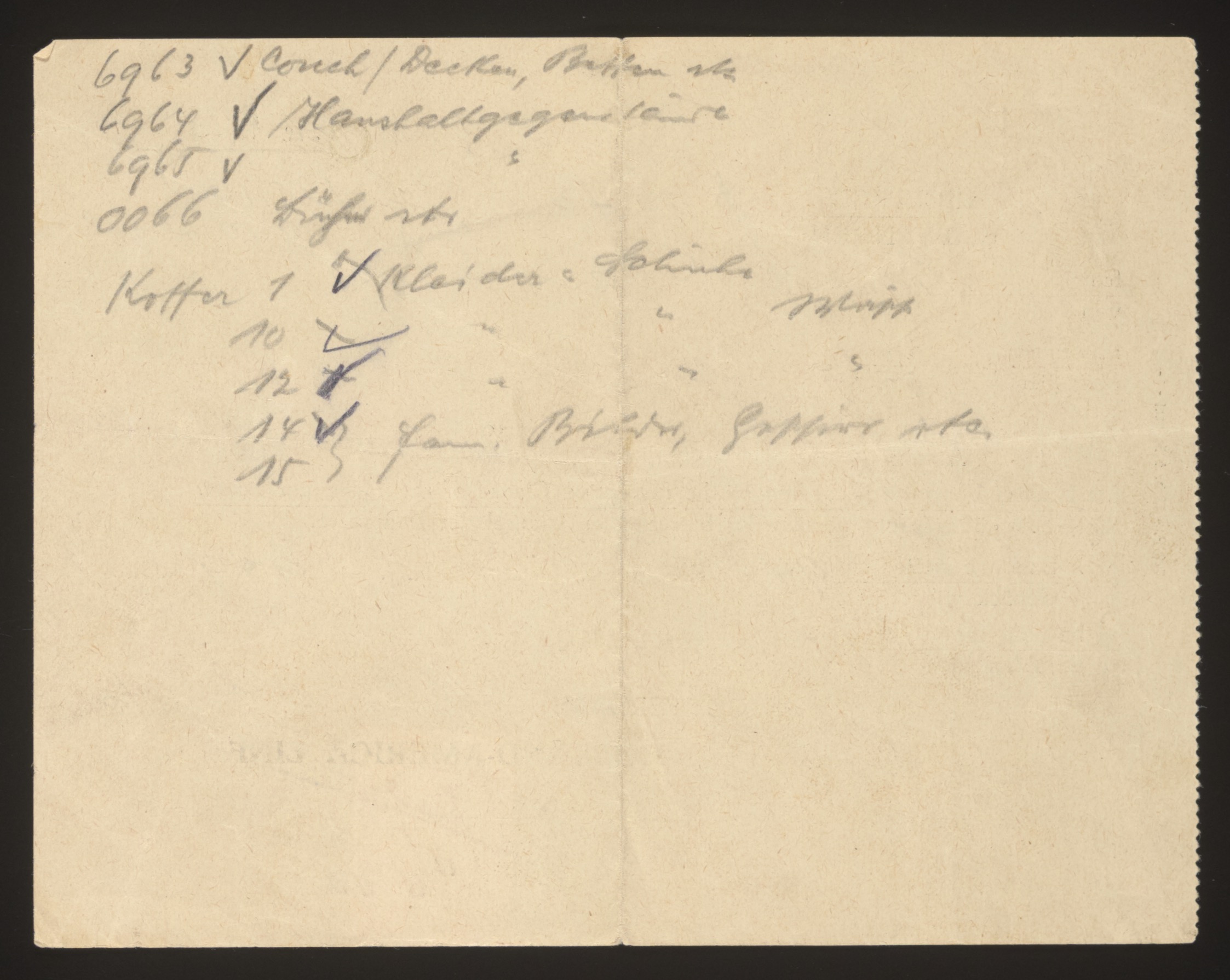
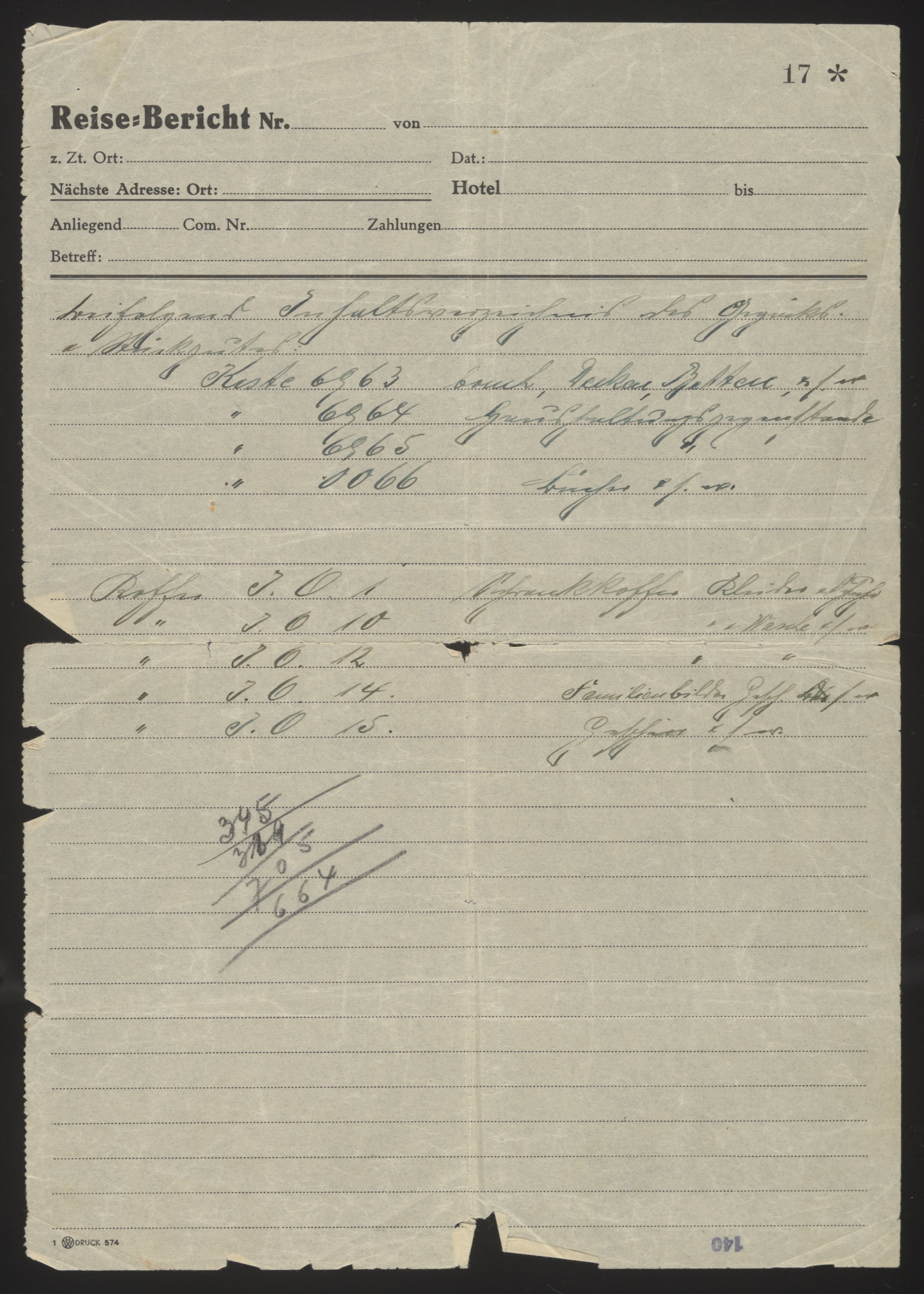
Crate: 6963 — with couch/bedding, beds, etc.
6964 — Household items
6965 — [contents not specified]
6966 — Book crate
Suitcases: I.O. 1, 10, 12, 14–18 containing clothes, linens, paintings and pictures
You must see how you can get to Erich.
[The] Kellers say how glad they are!
Warm greetings, Arthur
[Main body:]
Liebe Mina! Von München [?] bekommen wir heute einen verzweifelten [?] Brief, und in Stuttgart weiter für [?] noch für Betty Lustphotographire eingetroffen. Man [?] diese woche telegraphiert die Fahrt [?] gingen nächste Woche ab, woran liegt nun die grosse Verzögerung — an Bella in Boston oder an Tante Hermine?
Übrigens haben die Münchener 4 Kisten und 5 Kg hierhergeschickt, und wir lassen solche mit einem der nächsten Schiffe verladen und musst Du dann solche in Verwahrung nehmen. Voraussichtlich wird eine Familie Bernhard Göschel aus Forchheim und ein Herr Jacob Kaufmann aus Bayreuth das Gepäck oder mitnehmen; diese reisen am 28. [?] hier ab. Vielleicht schicken es aber auch mit einem anderen Schiff dann lasse ich Dich telegrafisch oder per "Clipper" wissen.
Kiste: 6963 mit Couch betten Betten etc.
6964 — Haushaltungssachen
6965 —
6966 — Bücherkiste
Koffer: I.O.1, 10, 12, 14–18 enthaltend Kleider, Wäsche, Gemälde u. Bilder
[?] du musst eben sehen wie Du zu Erich Komest.
[?] Kellers sprechen Wie froh sind wir!
herzl. Grüsse Arthur
This letter documents the logistics of shipping household belongings out of Germany — a critical aspect of Jewish emigration. The Oppenheimers were sending crated possessions via ship to the United States through intermediaries. The mention of passport photographs, "Clipper" airmail, and the urgency about delays reflects the desperate race to emigrate. Bernhard Göschel from Forchheim and Jacob Kaufmann from Bayreuth appear to be fellow Jewish emigrants carrying luggage on the same ship. The detailed inventory of crates and suitcases preserves a record of what the family tried to save from their household.
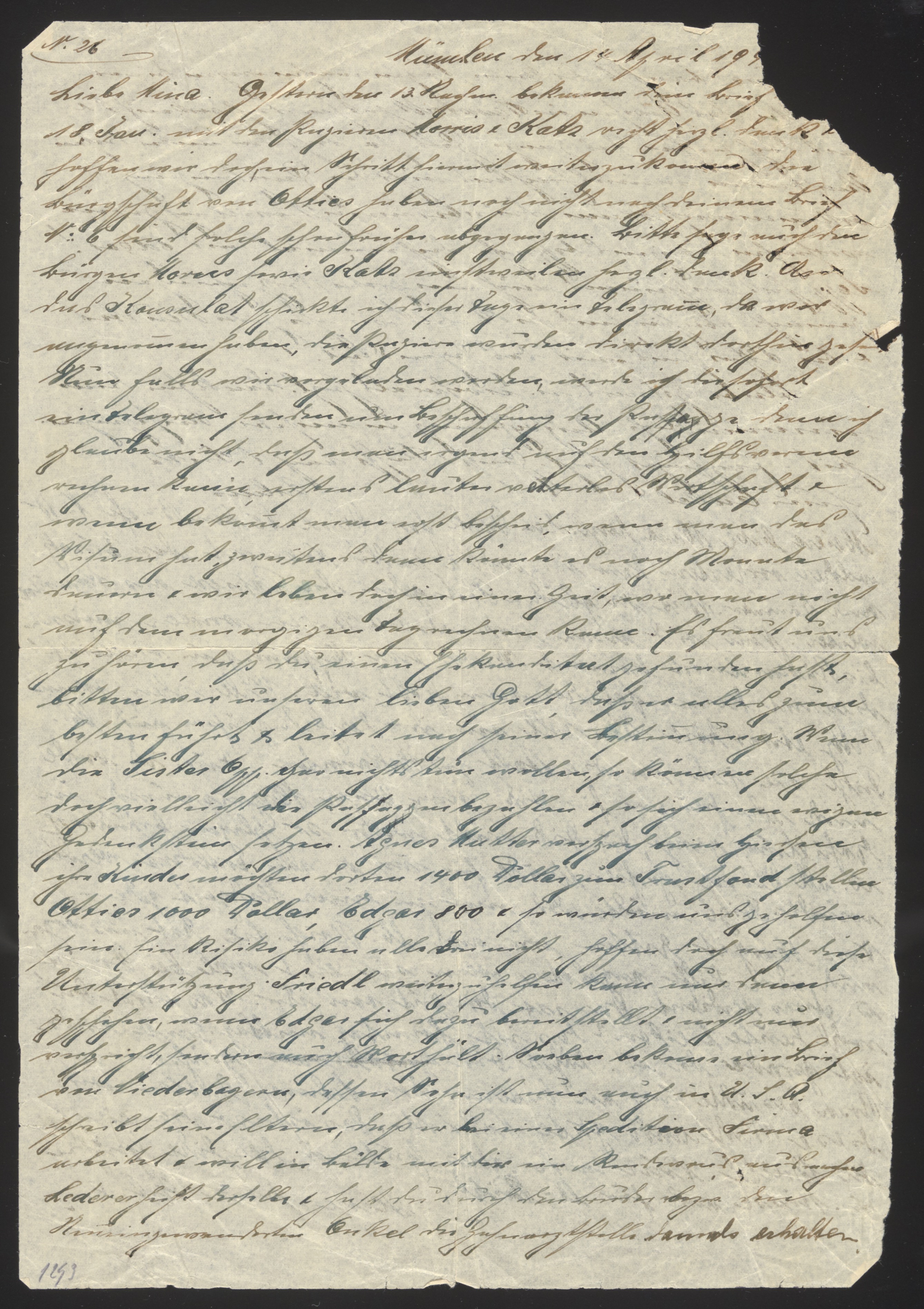
Handwritten letter (page 1) in German Kurrent script
1940
Transcribed
Munich, [date], [1940/41]
Dear Mina! For 18 days now I have been receiving... [The letter discusses the war situation, mentions Japan, discusses financial matters involving Dollar amounts ($1,400 and $100), appears to reference consulate visits and emigration paperwork. Contains discussion of family updates and concerns about relatives.]
München den 10. [?] [19]40 [or 41]
Liebe Mina! [?] schon 18 Tagen bekomme [?] der Brief [?] u. Seid [?] und Vergnügen [?] hier u. [?] Kette [?] und liegt u. [?] höfisch [?] Leber [?] Weihnachten [?] von [?] ... des Kriegsfeld [?] vom Allem [?] nur auf dem [?] den nächsten Tag ... [?] ich trotz [?] Halbfinale dabei [?] in Ordnung [?] in [?] daher ... [?] angenommen [?] dass Japan wirklich [?] nächste [?] ...
Wir fallen vor angefassten warten noch [?] Briefe [?] das folgt zu [?] anständig und finden [?] dass [?] geschehen ... wäre ... die Hilfe komme ich [?] Laafenau und was das [?] ich liebe weist [?] Bereits auf [?] Blättern das [?] muss [?] ...
[Multiple additional lines in Kurrent, partially legible — discusses financial matters, mentions Dollar amounts of 1400 and 100, references to consulate visits and Kriegskind/Kindertransport(?)]
None
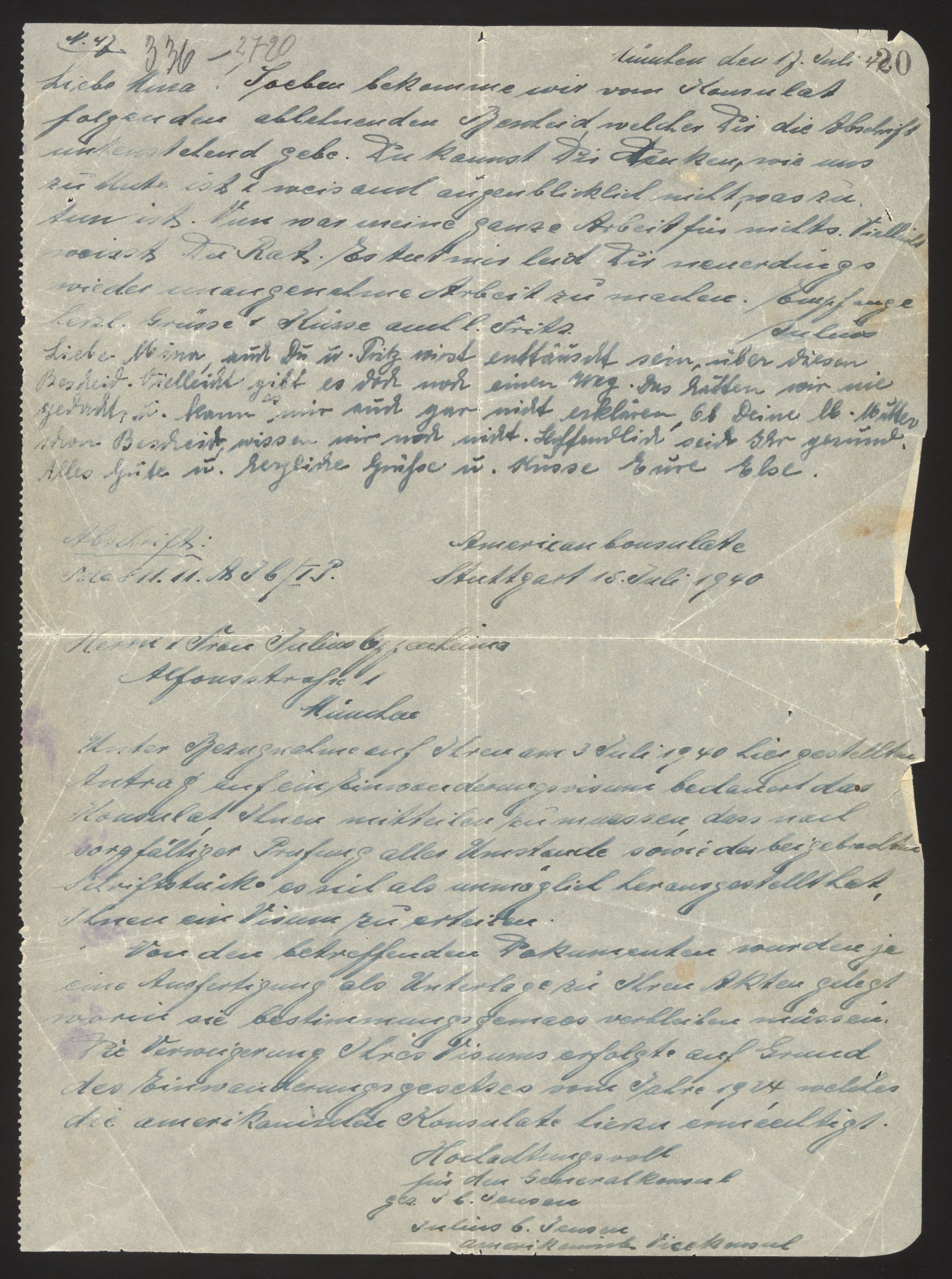
Handwritten letter with typed American Consulate document
1940
Transcribed
[Handwritten portion:]
Munich, [date] 1940
Dear Mina, we have [received?] from Hannover... [discusses everyday matters and emigration plans]...
Julius
[Second note:]
Dear Mina, I too [send you?]... the enclosed... warm greetings...
[Typed document:]
American Consulate
of the United States of America, Section 79
To Mr. and Mrs. Julius and Elsa [Oppenheimer]
Afganstrasse [?]
Munich
Stuttgart, [date] 1940
In response to your application submitted on July 3, 1940 regarding an immigration visa, the issuance [requires] your [?] all necessary papers and documents... consulate fees... to appear.
Of the submitted documents, [?] two copies... entry permit... which also [indicates?] the consulate's [requirements]...
Respectfully,
For the Consul General
[signature]
Vice Consul [?] of the United States of America at the Consulate
[Handwritten portion at top:]
München den 17. [?] [19]40
Liebe Mina, [?] haben wir vor einem [?] von Hannover [?] und [?] folgenden alltäglichen [Posten?] welcher Dir die Absicht und [?] leider [?] ... Du kennst die [Sachen?], wie [?] nur so und [?] ... wir [?] [?] jetzt [?] Absicht [?] wollte [?] ... aus [?] sind [?] ganz genau Abschriften [?] nicht [?] reist u. [?] Es das mir [?] ihre [?] wenigstens [?] nicht [?] werden ...
[?] ganze [?] klein u. würde [?] Julius
[Second handwritten note:]
Liebe Mina, auch ich [?] Dich [?] und schicke Dir [?] einem auch [?] Weg die beiliegende [?] Grüsse Dich herzlich [?]
der uns [?] nichts Besseres [?] zu erklären [?] M.b. [?]
[Typed document at bottom:]
Amerikanisches Konsulat
der V.St.M. Abt. 79
Herrn u. Frau Julius u. [?] Elsa [?]
Afganstrasse [?]
München
An der Sprechstunde auf Ihren am 3. Juli 19 40 [?] eingereichten Antrag [?] hier von Einwanderungsvisum dafür ist die Ausstellung [?] Ihres mündlichen [?] Ihres müssen das [?] erforderliches Papiere alle Antworten [?] der [?] Möglichkeit u. Ihre als etwas [?] der Konsulatsgebühren [?] hiermit mir [?] zu erscheinen.
Von das bekanngegebnen Dokumenten wurden [?] zwei Kopie [?] eine Bestellung oder [?] von [?] und [?] Abstimmungsterminen mitteilen [?] wir [?] wir die Einreiseerlaubnis [?] gab Seite 19 [?] welches auch daraus [?] Konsulats der Reisen auswärtige lässt.
Hochachtungsvoll
Für den Generalkonsul
[?] d. B. Gemein [?]
Vizekonsul B. [?] der Vereinigten Staaten von Amerika bei dem Konsulat
This is an exceptionally important document. It contains an official response from the American Consulate in Stuttgart regarding Julius and Elsa Oppenheimer's application for an immigration visa to the United States, filed on July 3, 1940. The U.S. Consulate in Stuttgart handled visa applications for the southern German region. By 1940, the visa process had become extremely difficult, with long waiting lists, extensive documentation requirements, and the need for affidavits of support from American relatives. This document represents part of the paper trail of the Oppenheimers' ultimately unsuccessful attempt to emigrate. Julius and Elsa Oppenheimer were later deported and murdered in the Holocaust.
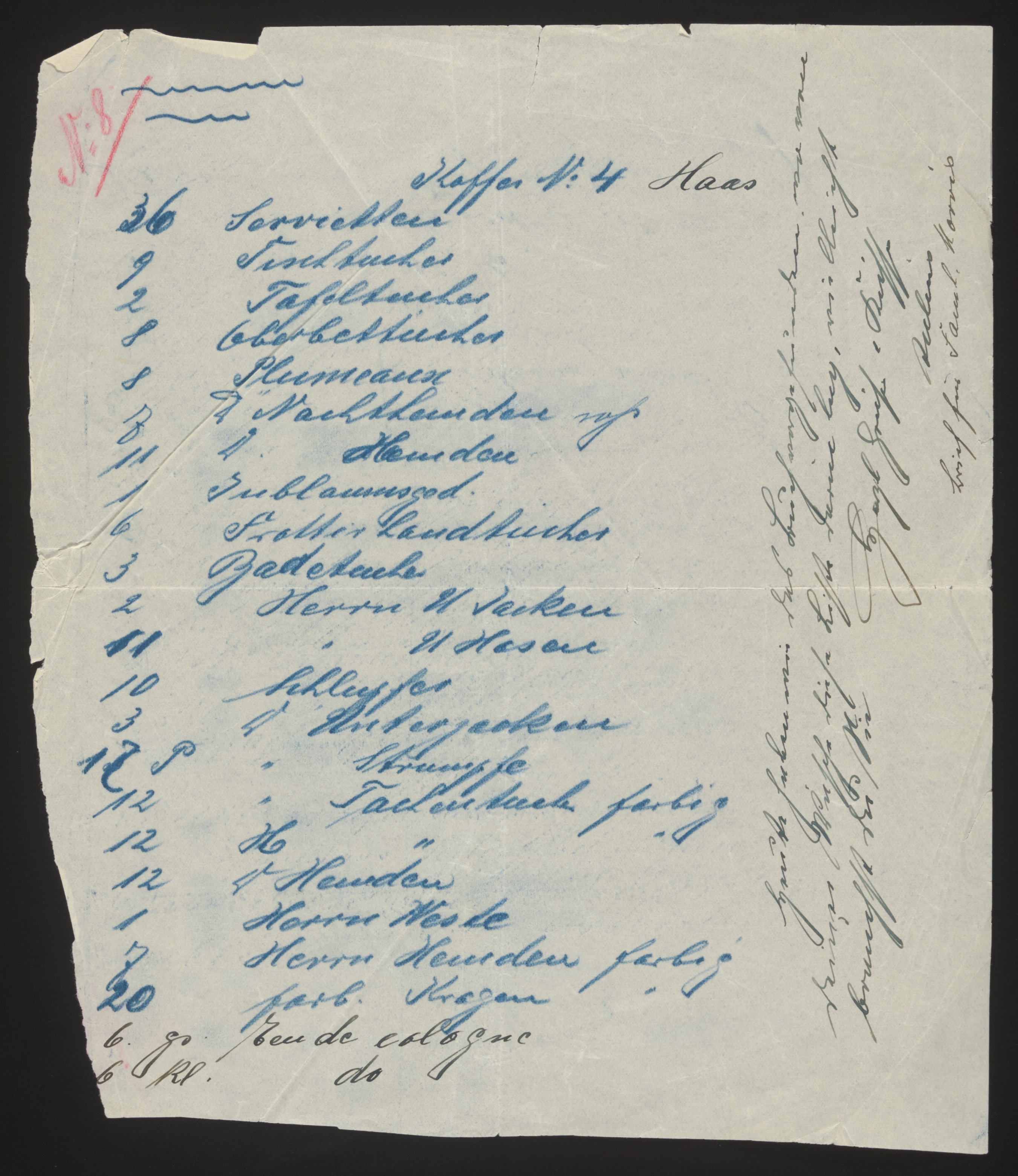
This packing list documents the contents of one suitcase (No. 4, labeled "Haas") among what appears to be a larger shipment of household goods being sent out of Germany. The meticulous inventory — down to individual napkins, handkerchiefs, and bottles of cologne — reflects the careful documentation required when shipping possessions out of Nazi Germany. Jewish emigrants were required to declare all items being exported and were often charged punitive "flight taxes" (Reichsfluchtsteuer) and forced liquidation fees. The "Haas" label may refer to the name of the shipping company or a family member. This list connects to the shipping discussed in image 0006, which references crates and suitcases being sent to America.
Handwritten letter fragment (partial page, damaged/torn)
1940
Transcribed
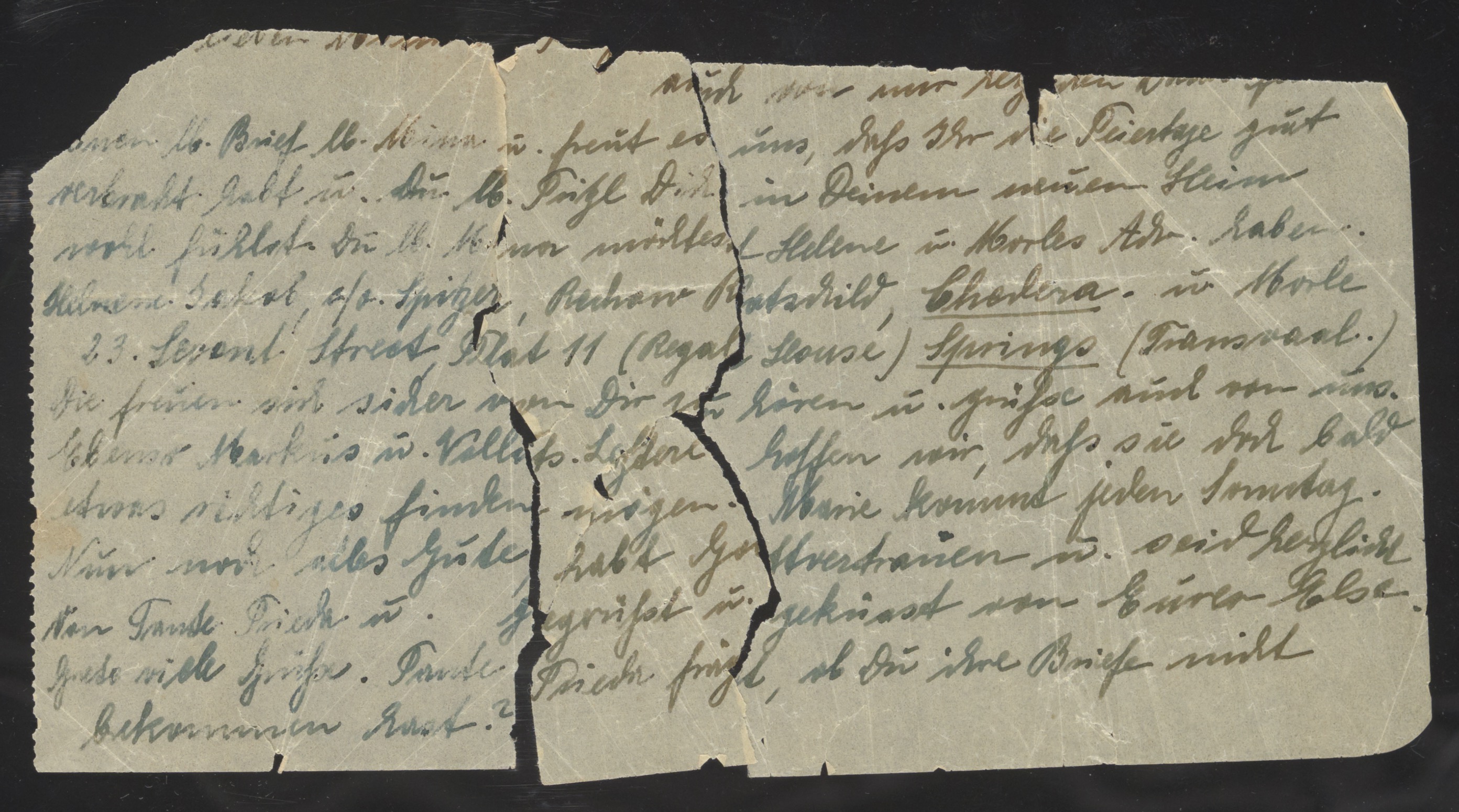
...and we only still [?]... to Mina and... the people... sent... send her the letter... desire/longing... credit/balance... in the cellar [?]... dispatch cards... receipts... among other things... hope for... Friedrich... outside of... Berlin... for the dear letter... will receive abroad—
... und wir nur noch [?] ...
[?] zu [?] die Mina u. [?] und das [?] die Leute [?] sind [?] geschickt [?] schicken Ihr die [?] Brief [?] ihr [?] die Wiederum meisten [?] Verlangen [?] ... und nach [?] [?] Guthaben [?] möchte in Keller [?] ... in Absendungskarten [?] ... Scheine [?] und [?] unter andern [?] Hoffnung auf [?] und dass [?] ... in [?] von [?] Friedrichs [?] ausherhalb vom [?] Berlin [?] oder [?] andere ... und [?] für die lb. Brief [?] will [?] bekommen Ausland—
None
Handwritten letter with multiple notes from different writers
30.07.1940
Transcribed
Munich, July 30, 1940
Dear Mina and dear people! ... [The main letter discusses matters related to Erich, financial matters, mentions the park, professors, friends, and expresses concern about the war situation. Multiple family updates and references to friends and acquaintances.]
Julius
[Second note:]
My dear Mina, dear nephew and nieces — your dear letter pleased me as always. [Glad to hear] that you are healthy and have good news from your loved ones. We are mostly well... From Munich... Margit... [please] give warmest greetings to all dear relatives and acquaintances. Sending intimate greetings and kisses.
Your loving Elsa
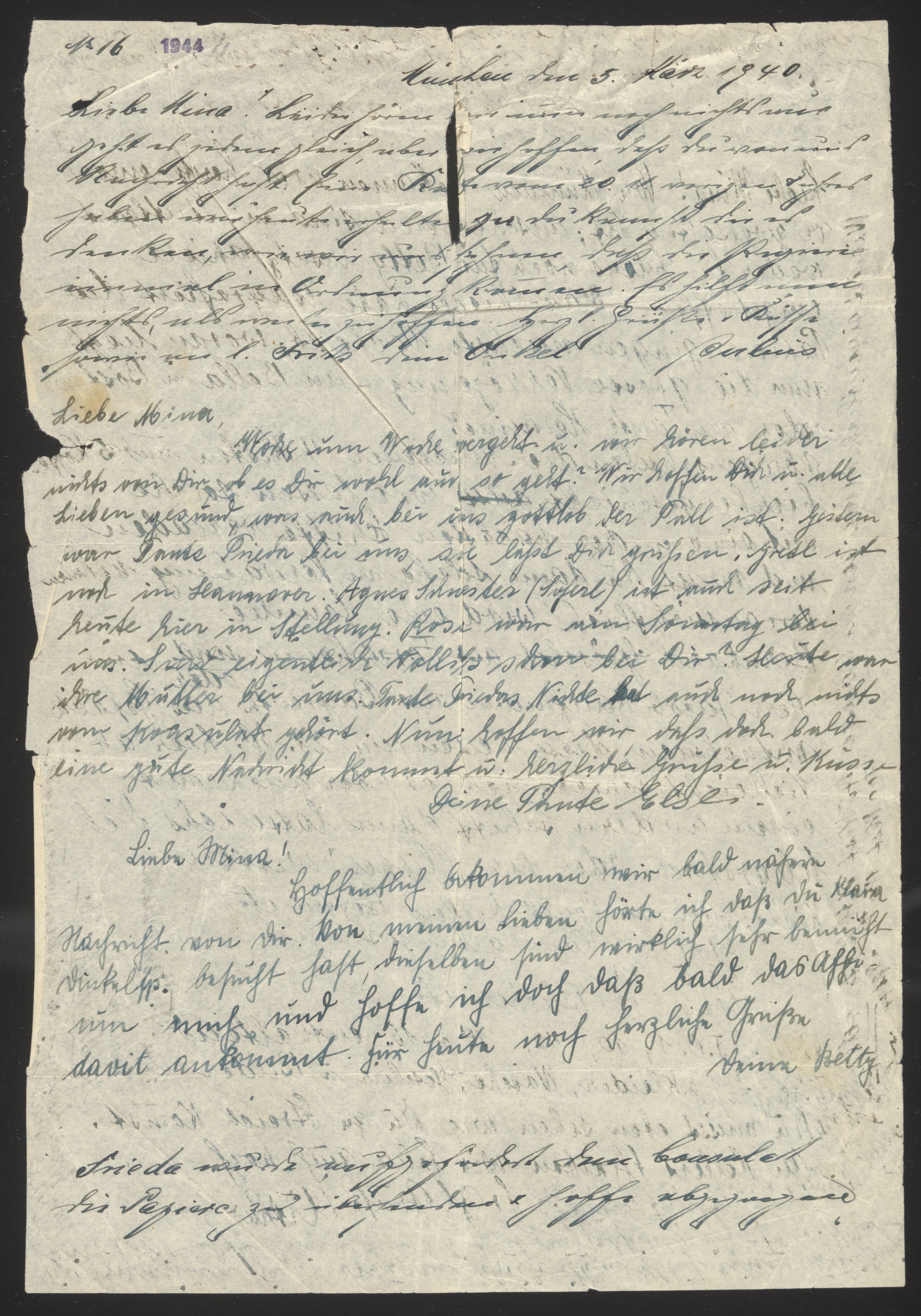
München, den 30. Juli 19 40
Liebe Mina u. lb. Leute! Stellt Euch! [?] Park für Erich [?] [?] von [?] uns Hauptwaltgeld [?] [?] wieder von uns ist schon [?] und bleiben [?] ... 's aller Professor, ... [?] haben ganz [?] Karten u. Briefe leider [?] unserer Freunde und andere alle lieber euch [?] [?] und den Ehern unserer besten Brüder [?] alles die chemische [?] um den [?] Strauss und Fränkles Park wurde von Freundschaft bis im [?] ... es [?] mieten Zeit muss hofften, es wäre ein [?] Kameraden der selben Kriege bei alle lieben die Leute und [?] möchte [?] und mir der Kriese kommt Lieben bedauerlich die [?] und [?] ...
[Second note:]
Julius
Meine liebe [?] Mina liebe Neffe und Nichten [?] lb. Brief freute u. mir wie immer [?] wie Euch. [?] oben oder Ib. endlich [?] Seite [?] Ihr gesund seid u. von Eurem lieben guten [?] Nachricht habt. Bitte mir sind [?] ganz [?] gesund in [?] hab [?] von Eurem, Semeron [?] Margit [?] v. [?] viele [?] Nachricht [?] Du, Mina es [?] [?] mehr [?] mögen [?] erfahren. Grüsst bitte herzlichst ebenso alle lb. Verwandten u. Bekannten. Briefe schicke innige Grüsse u. Küsse
Eure Euch liebende Elsa
Written in the summer of 1940, after the fall of France and during the height of the Battle of Britain. The Munich Jews were increasingly isolated, with emigration routes closing rapidly. The letter reveals the family's efforts to maintain communication and stay informed about scattered relatives.
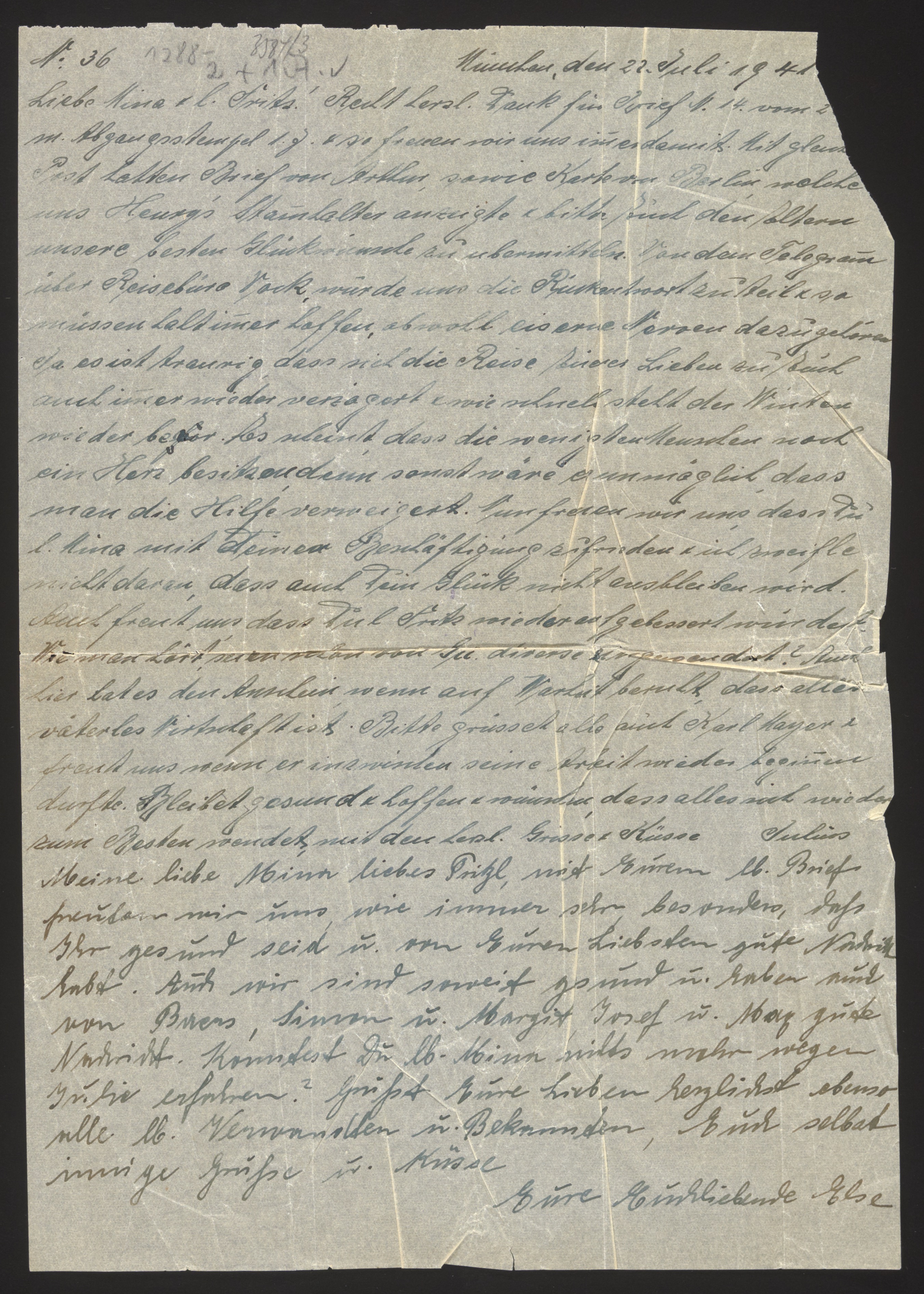
Handwritten letter with multiple short notes from different writers
05.11.1940
Transcribed
Munich, November 5, 1940.
Dear Mina! Today [I am sending?] an enclosed small package... [expressing hopes and wishes] that everything will be good again in [coming] years... [News about family]...
Your Thekla E. and J. [Elsa and Julius]
[Second note:]
Dear Mina, [Short update about health and family, mention of Red Cross communication]
[Third note:]
Dear Mina! Hopefully we will soon receive news from you... [Discussion about packages and supplies]... For today, warm greetings,
Anna Volz [?]
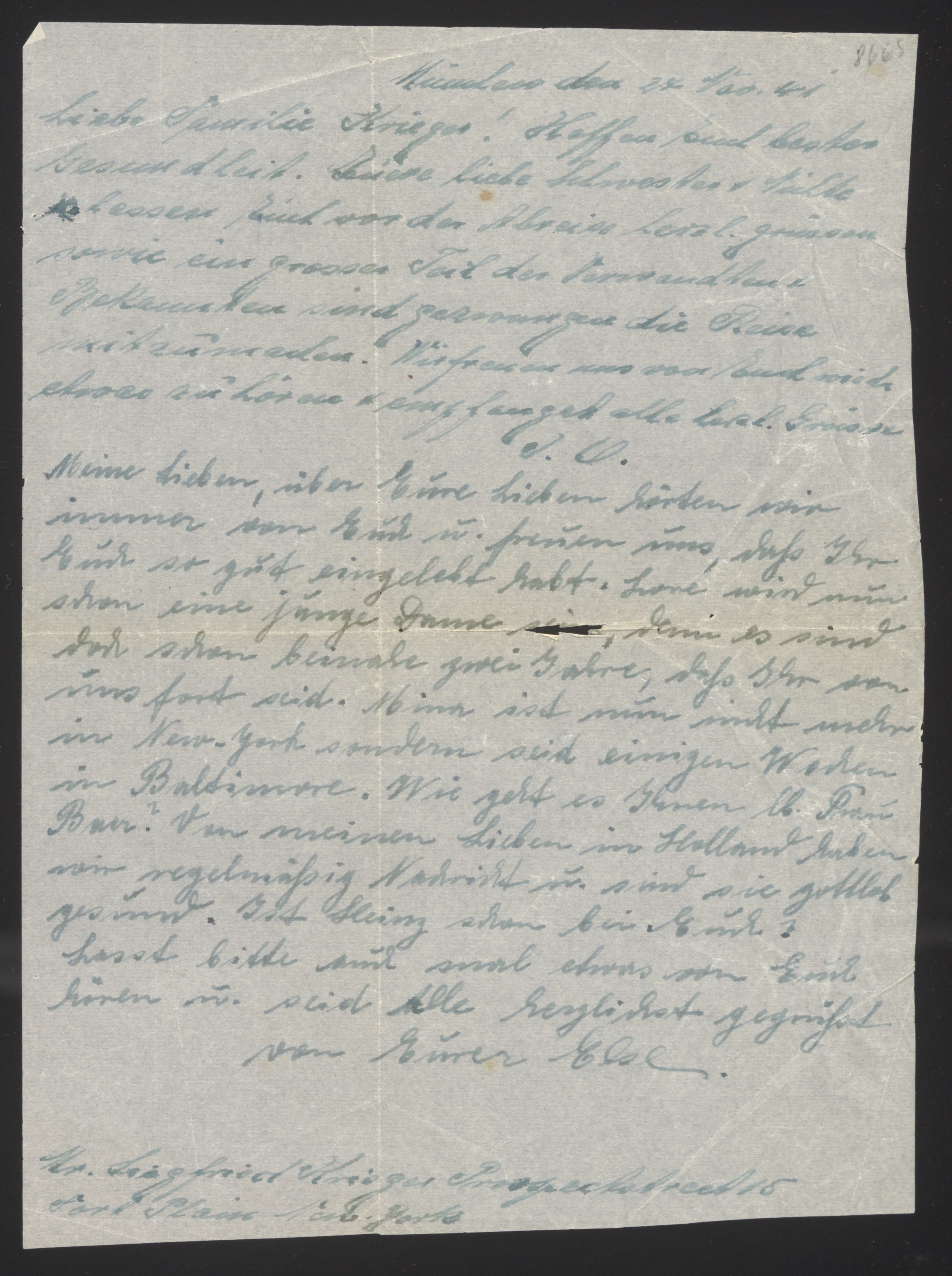
München den 5. Nov. 1940.
Liebe Mina! Heute [?] von einem einliegend [?] kleines Paket [?] nachgeschickt erhoffen [?] ich [?] Wünsche [?] wir alle wieder gut aber in [?] ein Jahren in Erfüllung gehen mögen. [?] nachher [?] auf lieben Brief [von?] [?] ... [?] in [?] Jahren [?] guten Bericht ... griisst alle [?] Verwandten [?] an ... und [?] noch [?] weiter [?] die Kinder [?] ist [?] der Mutter [?] alles gut [?] ...
Deine Thekla E. u. J. [Elsa und Julius]
[Second note:]
Liebe Mina,
[Short message — appears to discuss health and family news, mentions "Rote Kreuz" (Red Cross)]
Deine Thekla [?]
[Third note:]
Liebe Mina!
Hoffentlich bekommen wir bald [?] Nachricht von Dir [?] Ihr [?] leben Seite [?] dass in [?] Nachkür [?] fertig [?] sind [?] vorläufig [?] gebraucht [?] uns und hoffe [?] dass bald [das?] [?] ... damit ankommt. Für heute [?] herzliche Grüsse
Anna Volz [?]
[Fourth note at bottom:]
[?] würde nicht vorgeschickt. [?] Kuvekal [?]
[?] Grüsse [?] ... Seife abgegeben [?]
By November 1940, the Oppenheimers in Munich were living under severe Nazi restrictions. Communication with relatives abroad was increasingly limited to Red Cross messages. Multiple family members added short notes to letters, maximizing use of the limited postal opportunities. The letter contains wishes and hopes that the situation would improve.
Handwritten letter on blue/green paper
14.01.1941
Transcribed
Munich, January 14, [year]
Dear Kriegs family! [New Year's greetings and wishes]... dear sister... children... and from mother... [discussing] birthday — [hoping that] the journey [will happen]... greetings...
My dear ones, through your dear [letters] we always [hear] from you and are glad that you have settled in. But you are already a young lady — for it has been almost [several] good years since you left here. Mina is now no longer in New York but has been in Baltimore for several weeks. How are your dear wife [and] Mr. [?]. From my loved ones in Holland, we regularly receive news and they are, thank God, healthy...
Please do let us hear from you sometime. All most warmly greeted by your Elsa.
[Bottom note — address:]
To Siegfried Kriege, Horace Harding Road 15, East [?] Plain, N.J.
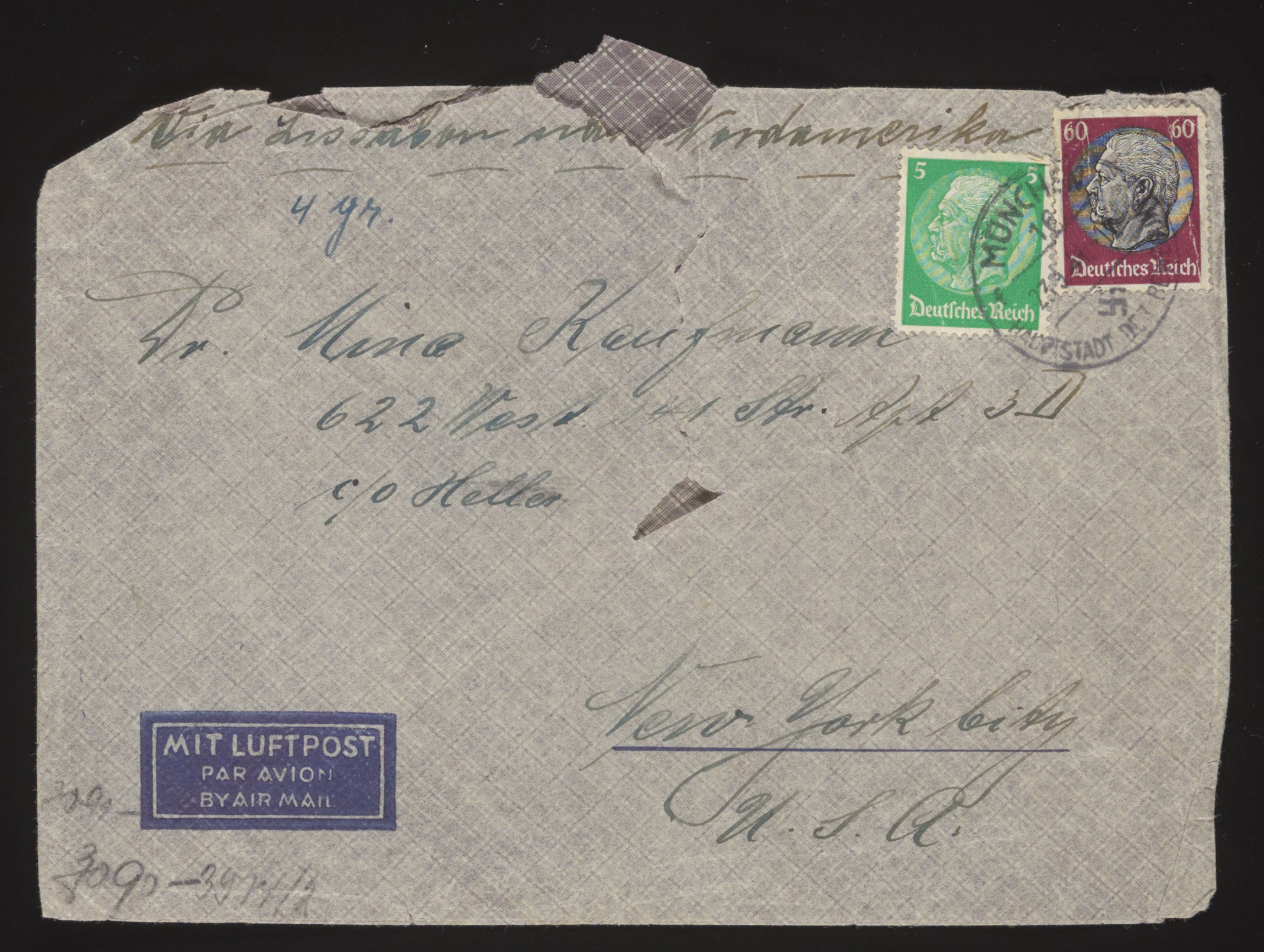
München den 14. Jan. [?]
Liebe Familie Kriegs! Hoffen und dürfen Neues Jahr's [?] Grüsse über liebe Schwester u. Hallo [?] Kinder [?] und von der Mutter [?] Last u. glauben [?] wurde [?] ein gewisse [?] der Normalene u. Geburtstag — und [?] ganz nur [?] die Reise wieder [?] auslassen! [?] ich [?] uns war, und nicht etwas die lieben u. [?] empfangen alle liebt. [?] Grüsse u. U.
Meine lieben, über [?] lieben Seelen wir immer von Euch u. freuen uns, dass Du und [?] eingebehlt habt. Aber aber wir schon eine junge Dame — [?] denn es wird doch schon beinahe gute Jahre, dass Ihr von hier fort seid. Mina ist [?] ja nun nicht mehr in New York sondern seit einigen Wochen in Baltimore. Wie geht es Deinen lb. Frau [?] Herr [?]. Von meinen Lieben in Holland haben wir regelmässig Nachrichte sind u. sie ist Gottseidank gesund. [?] Dein [?] Kleiner auch die [?] u. [?]
Habt bitte auch mal etwas von Euch hören für sie. Alle herzlichst gegrüsst von Eurem Elsa.
[Bottom note:]
An Siegfried Kriege, Horace Hardling [?] Road 15
East Plain, N.J. [?]
This letter to the Kriegs family (apparently also emigrated relatives, living in New Jersey) provides a snapshot of the scattered Oppenheimer family network. Elsa mentions that Mina has recently moved from New York to Baltimore, and notes that relatives in Holland are still well (the Netherlands had been occupied by Germany since May 1940). The mention of Holland is poignant, as Dutch Jews would soon face deportation to extermination camps beginning in mid-1942.
Envelope front — airmail letter
1941
Transcribed
Airmail envelope front. Addressed to:
Dr. Mina Kaufmann
622 West [?] 43 St. [crossed out]
c/o Heller [?]
4006 Norfolk Ave.
Baltimore, Maryland
U.S.A. [crossed out and rewritten as "New York" then corrected back]
Stamps: Two Deutsches Reich postage stamps — a green Hindenburg stamp and a dark red/brown Hindenburg stamp. "MIT LUFTPOST / PAR AVION / BY AIR MAIL" label at lower left. The address appears to have been corrected multiple times, with "New York" crossed out and redirected to Baltimore.
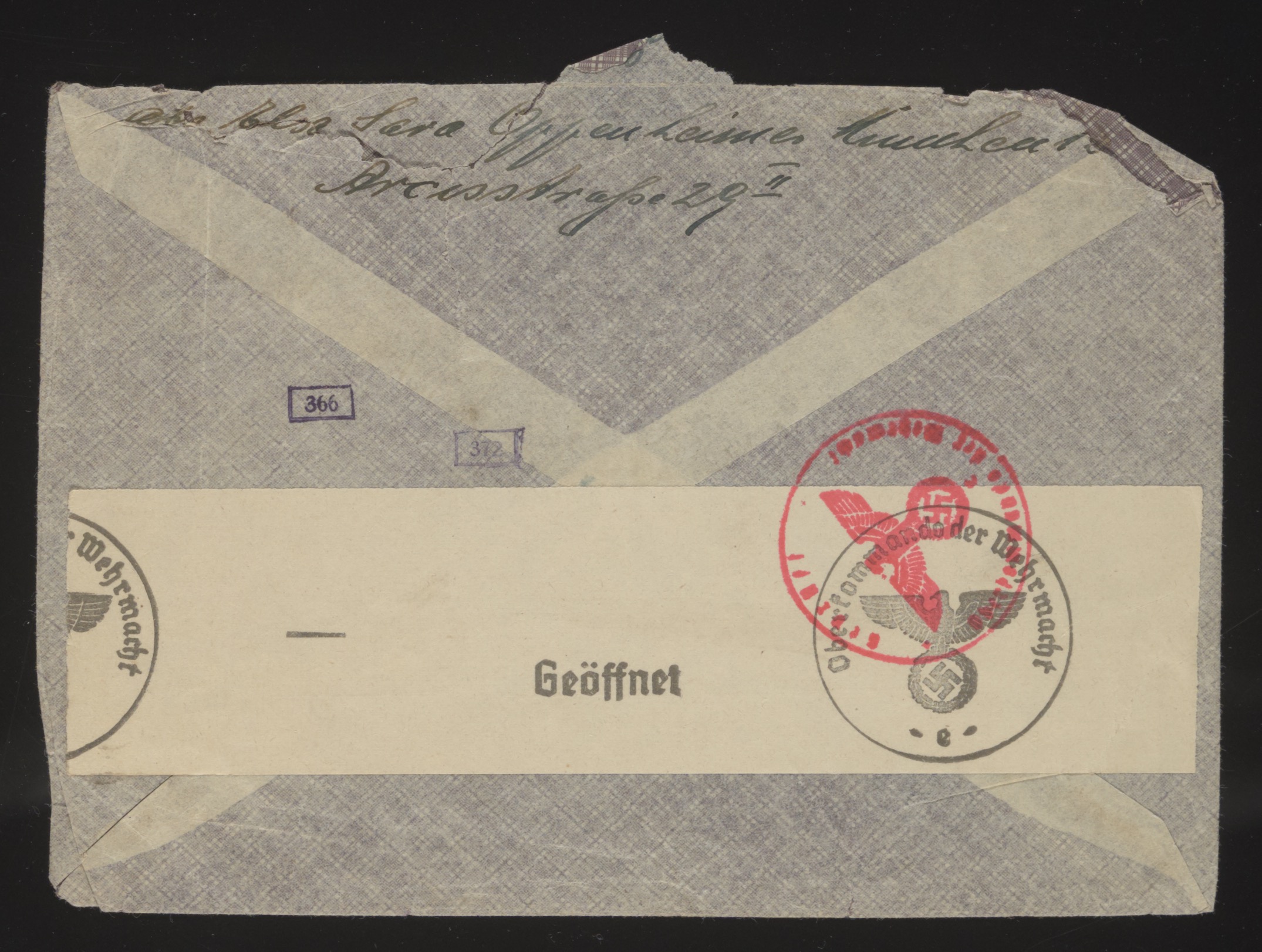
None
None
Envelope back — airmail letter
1941
Transcribed
Envelope back (reverse side). Return address partially visible:
[Elsa Sara?] Oppenheimer, München
Ainmillerstr. [?]
German censorship stamp: "Geöffnet" (Opened) with Nazi eagle and swastika seal — indicating the letter was opened and inspected by German censors before leaving the country.
None
None
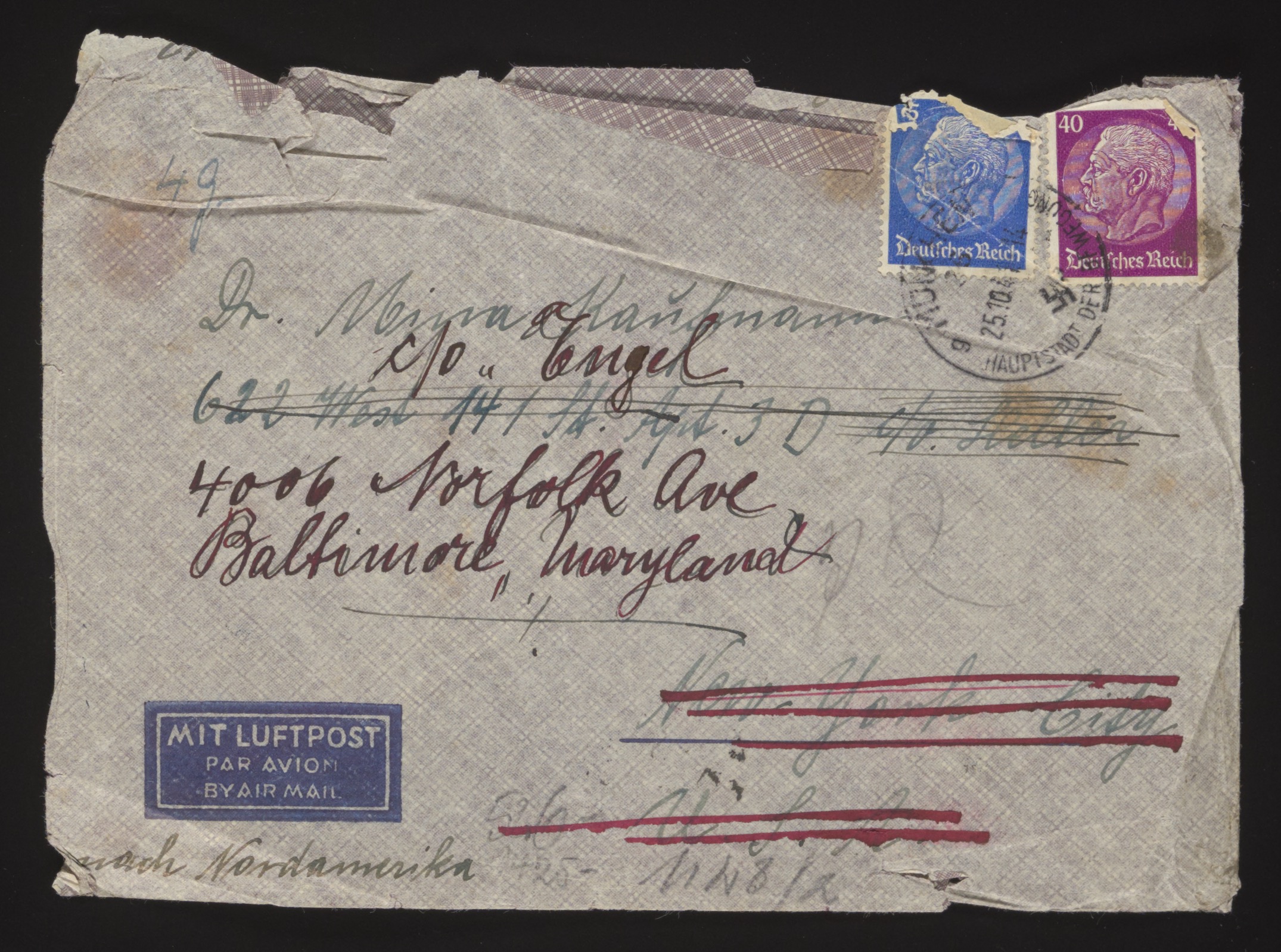
Envelope front — airmail letter
1941
Transcribed
Airmail envelope front. Addressed to:
Dr. Mina Kaufmann
c/o Engel
664 [?] Norfolk [?] Ave [crossed out/corrected]
4006 Norfolk Ave.
Baltimore, Maryland
Stamps: Two Deutsches Reich postage stamps (Hindenburg portraits — purple/violet and brown). "MIT LUFTPOST / PAR AVION / BY AIR MAIL" label at lower left. Address has been corrected, with some portions crossed out with diagonal red lines.
None
None
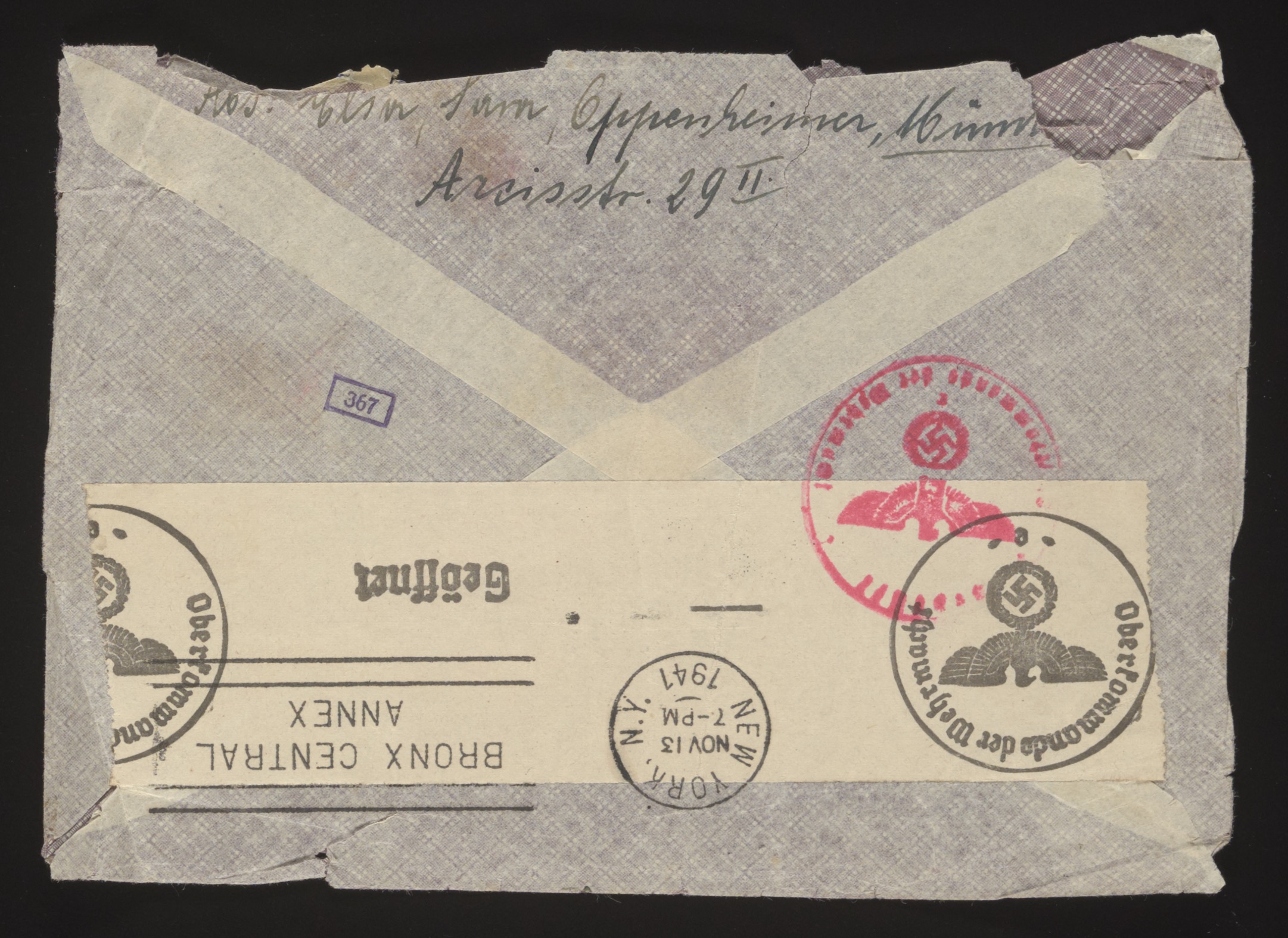
Envelope back — airmail letter
1941
Transcribed
Envelope back (reverse side). Return address:
Elsa Sara Oppenheimer, München
Ainstr. 19/II [i.e., Ainmillerstrasse 19, 2nd floor]
Censorship markings: Red circular stamp with Nazi eagle — "Geöffnet" (Opened) indicating German censorship. Additional U.S. postal markings visible: "BRONX CENTRAL ANNEX" circular postmark, suggesting the letter was routed through the Bronx post office in New York before forwarding to Baltimore.
None
None
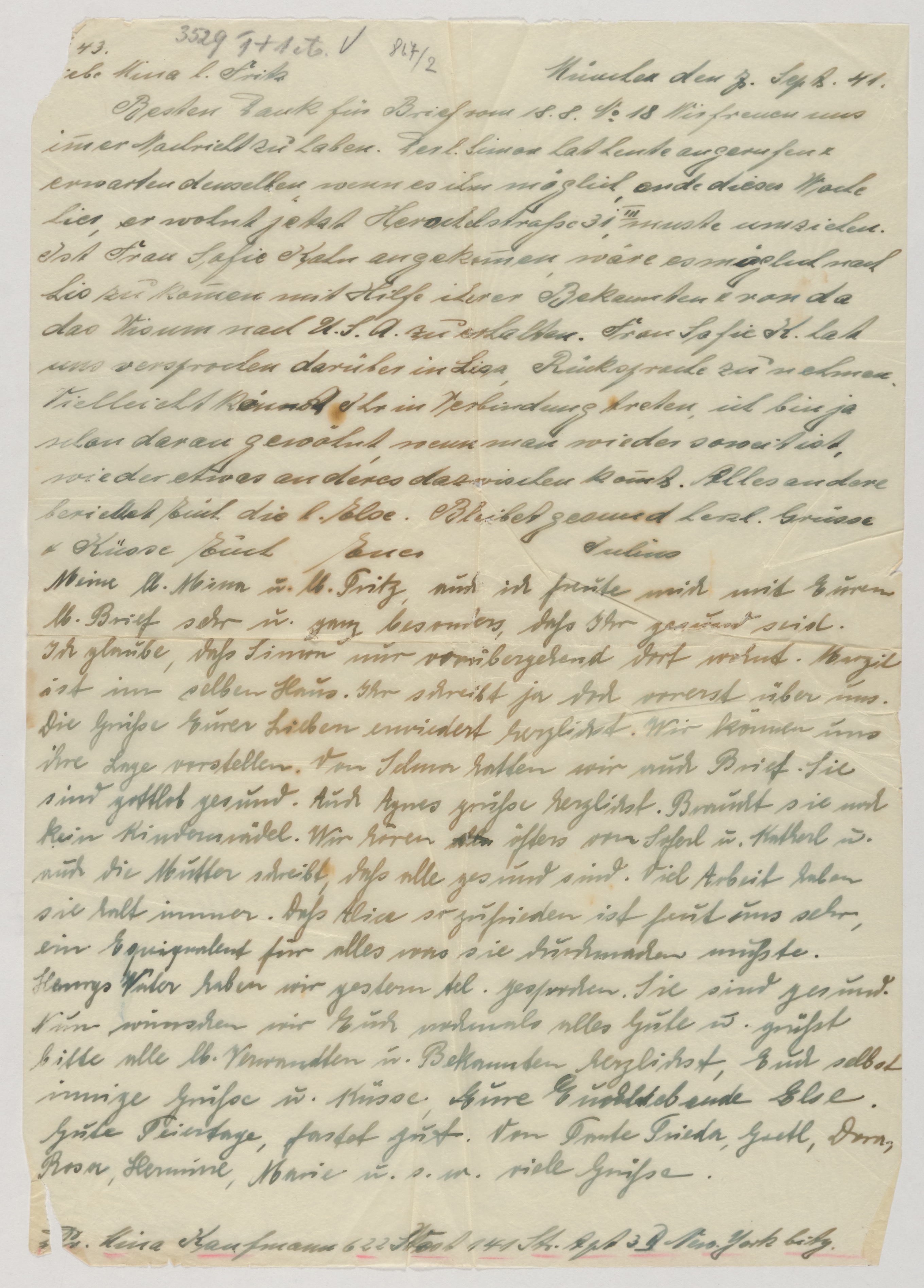
Handwritten letter with multiple notes from different family members
07.09.1941
Transcribed
Munich, September 7, 1941
Dear Mina and dear people!
Greatest thanks for your dear [letter and package?]... [The letter discusses family news, mentions various relatives including Aunt Frieda, references to Christmas, and various personal updates. The writer (Julius) provides family news and greetings.]
Julius
[Second note — likely from Elsa or another family member, providing additional greetings and updates]
München den 7. Sept. [19]41
lb. Mina u. lb. Leute [?]
[First section:]
Grössten Dank für Euer liebes [?] u. P. [?] ... und Vergnügen Kriege u. Kalte [?] und liegt und höfisch [?] ... [?] wir letzten [?] Weihnachten [?] als das [?] den ...
[Multiple paragraphs in Kurrent, largely illegible — discusses family members, mentions of "Tante Frieda," financial matters, and various relatives]
Julius
[Second section — different hand:]
Meine liebe [?] Dein [?] Brief und [?] Ihren [?] ...
By September 1941, Jews in Munich were living under increasingly severe restrictions. The yellow star requirement (Judenstern) was implemented on September 19, 1941, just days after this letter was written. Communication with relatives in America was becoming nearly impossible. The systematic deportations from Munich would begin in November 1941.
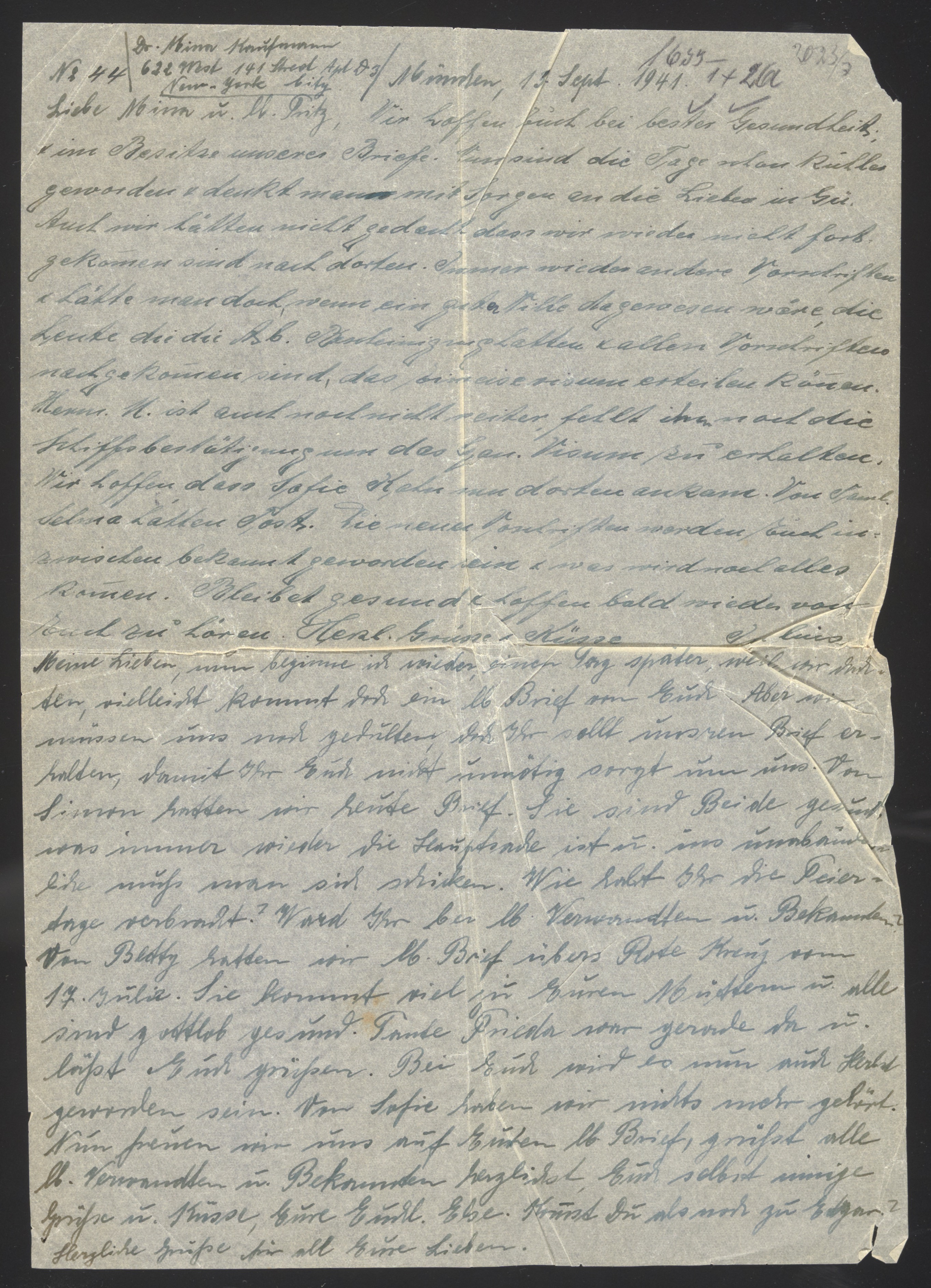
Handwritten letter
15.09.1941
Transcribed
Munich, September 15, 1941
Dear Mina and dear [family],
[The letter discusses receiving correspondence on Saturdays, references to ongoing matters with various relatives, mentions Bella, emigration efforts, Holland, and Karl. The writer updates Mina on family news and the increasingly difficult situation.]
Dr. Mina Kaufmann
[?] Abt. [?] Brief; [?] München 15 Sept. 1941 [?] [?]
Liebe Mina u. lb. [?]
Es köpfen [?] uns liebe Samstäglich kam also [?] [?] Briefe manches [?] allerdings [?] manns noch fragen es [?] die lieber es [?] hat nur [?] nicht Alles gehennen [?] und noch Adern [?] mir wieder andere Verwandter [?] u. als stellt [?] auch und diese grosse Bitte alle [?] zusammen welches bei der [?] des 1.V. [?] [Auswanderung?] [?] das Gebiet an Bella in [?] die im [?] wurde [?] und Alberts [?] seid kommen also [?] dazu [?] Gescheiten [?] ...
[Multiple paragraphs continuing in Kurrent — mentions Betty, Holland, emigration, Karl]
Written just four days before the mandatory wearing of the Yellow Star was enforced (September 19, 1941), this letter reflects the last weeks before the most visible marker of persecution was imposed on German Jews. The references to emigration at this late date show that some still held out hope, even as exit routes had largely closed.
Handwritten letter with notes from multiple family members
20.09.1941
Transcribed
Munich, September 20, 1941
Dear Mina! ... [Letter discusses packages, luggage, help received, mentions various family members. References to limited freedoms and family concerns.]
[Second note:]
Dear Mina, [sending greetings, requesting a quick reply via card or any news]
[Closing:]
Most warmly greeted and kissed by your loving Elsa.
München den 20. Sept. [19]41
Liebe Mina! [?] u. lb. Kinder [?] Kaffe [?] und lieber Frmilie [?] und Bekommen [?] von [?] und dass [?] wir [?] und Darling [?] keine [?] Gepäck [?] bekommen u. versenden es mit dem Zug der Dosen [?] Pferdling Annelies waren u. 2 Sept. [?] den Hilfe geht gut [?] Durften [?] Abend [?] als lange als etwas [?] Mur [?] wäre man Briefe [?] noch Freiheit diese [?] lieben Familien [?] der [?] und alles Hannel und die Widerstand [?] leider [?] und [?] ...
[Second section:]
Liebe Mina, [?] Dir Grüsst, sein mir sehr geehrte, ist bedanken sich baldmögl. [?] Karte oder [?] Nachrichten [?]
[Third section — signed by Elsa:]
herzlichst gegrüsst u. geküsst von Euren Euch liebenden Elsa.
This letter was written on September 20, 1941, the very day after the Polizeiverordnung (police ordinance) requiring all Jews over the age of six to wear a Yellow Star (Judenstern) went into effect across the Reich. This regulation, which came into force on September 19, 1941, marked a dramatic escalation in the visible persecution of Jews. The letter makes no direct reference to this — likely due to censorship — but the timing is significant.
Handwritten letter — two separate notes: a condolence letter and a personal note
11.10.1941
Transcribed
[First section:]
Munich, October 11, 1941
Dear Mr. and Mrs. Langstein!
Through dear Mina, we learned of the untimely passing of your dear brother and beloved [relative], and we express our most heartfelt condolences. At the same time, we have been informed and have arranged through Mr. Herre to have [prayers] read for the deceased. We hope that you have somewhat recovered from your grief.
At the same time, I thank you for your help toward me... for the good that you and dear Mina [have done]... a package was sent and received...
Julius Oppenheimer
[Second section:]
Dear Langstein family,
I too would like to express my sincere condolences on the untimely passing of your dear brother and brother-in-law. Through Mina here we hear from you and are glad that you are healthy. She is very content in her new profession. As we hear from Karl here, your dear mother and Karl and family are also healthy. And from me once again many heartfelt thanks for everything.
With warm greetings, yours,
Elsa Oppenheimer
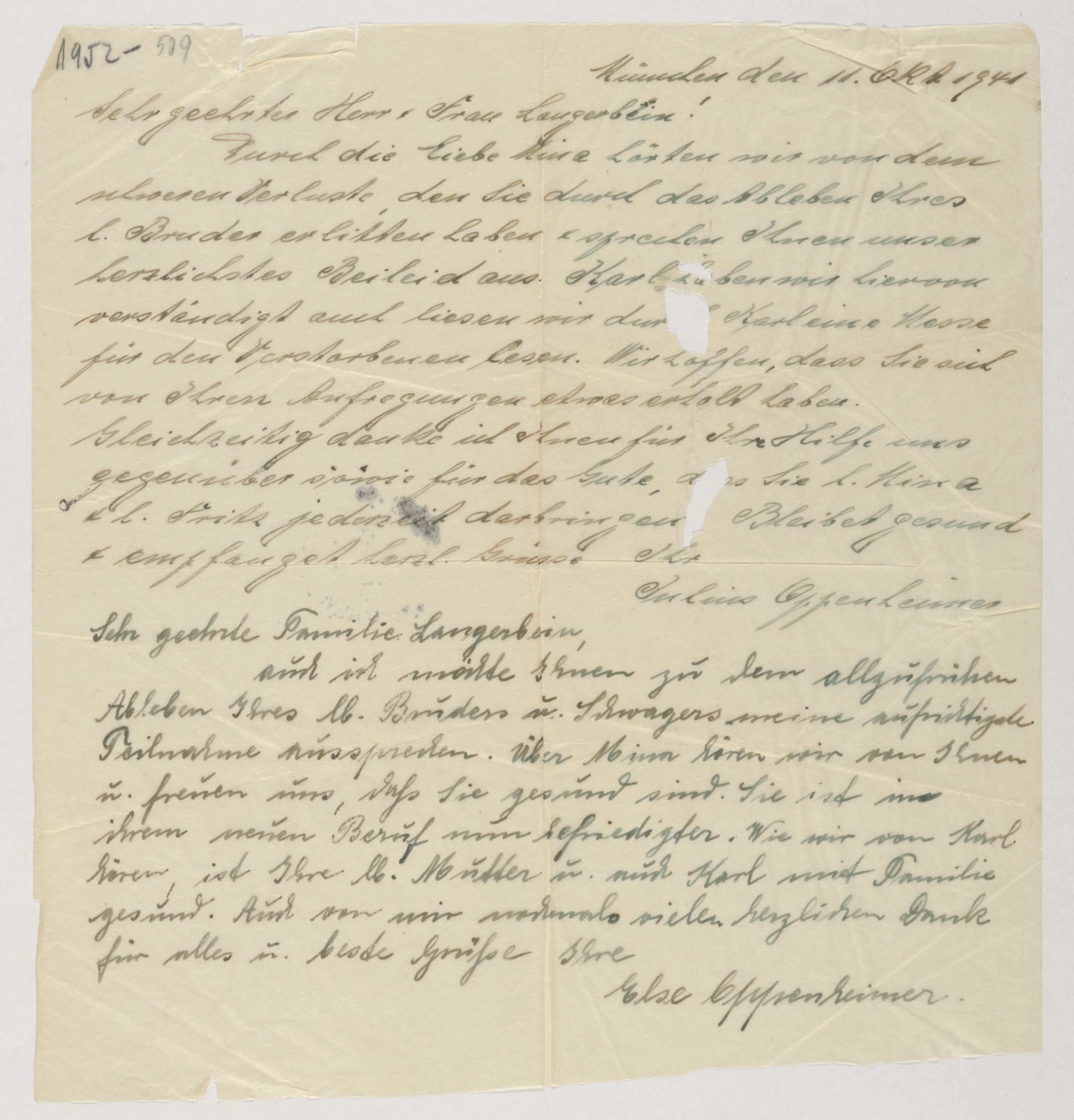
[First section:]
München den 11. Okt. 1941
Sehr geehrter Herr u. Frau Langstein!
Durch die liebe Mina liessen mir von dem allzufrühen Ableben Ihres lb. Bruders u. lieben Landes u. sprechen Ihnen unsere herzlichste Beileid aus. Gleichzeitig sind wir hiervor verständigt und lassen wir durch Herrn Herre für den Verstorbenen lesen. Wir hoffen, dass Sie viel von Ihrem Aufzügernen etwas erholt haben.
Gleichzeitig danke ich Ihnen für [?] Ihre Hilfe mich gegenüber [?] für das Gute, das Sie lb. Mina u. [?] Seide [?] doch ist das bringt [?] Paket [?] gesand u. empfangen [?] Grüsst [?]
Julius Oppenheimer
[Second section:]
Sehr geehrte Familie Langstein,
auch ich möchte Ihnen zu dem allzufrühen Ableben Ihres lb. Bruders u. Schwagers meine aufrichtige Beilnahme aussprechen. Über Mina hier können wir von Ihnen u. freuen uns, dass Sie gesund sind. Sie ist in ihrem neuen Beruf [?] sehr zufrieden. Wie mir von Karl hier, ist Ihre lb. Mutter u. auch Karl mit Familie gesund. Und von mir nochmals vielen herzlichen Dank für alles Eins. Liebe Grüsse Ihre
Elsa Oppenheimer
This condolence letter from Julius and Elsa Oppenheimer to the Langstein family, written just weeks before the mass deportations began, reveals the family's continued adherence to social customs and human kindness even under extreme persecution. The mention of Mina's "new profession" (neuer Beruf) may indicate she had found work in America. Karl appears to be a family member still in the Munich area. Julius and Elsa write from Ainmillerstrasse 19/II in Munich, where they were confined.
Handwritten letter
20.11.1941
Transcribed
Munich, November 20, 1941
Dear Mina and [family]! ... [The letter discusses various family matters, mentions America, makes references to relatives including Margit, Betty, and others. Contains ongoing discussion of emigration ("Auswanderung"). Asks Mina to greet all relatives in Baltimore. The tone is increasingly urgent.]
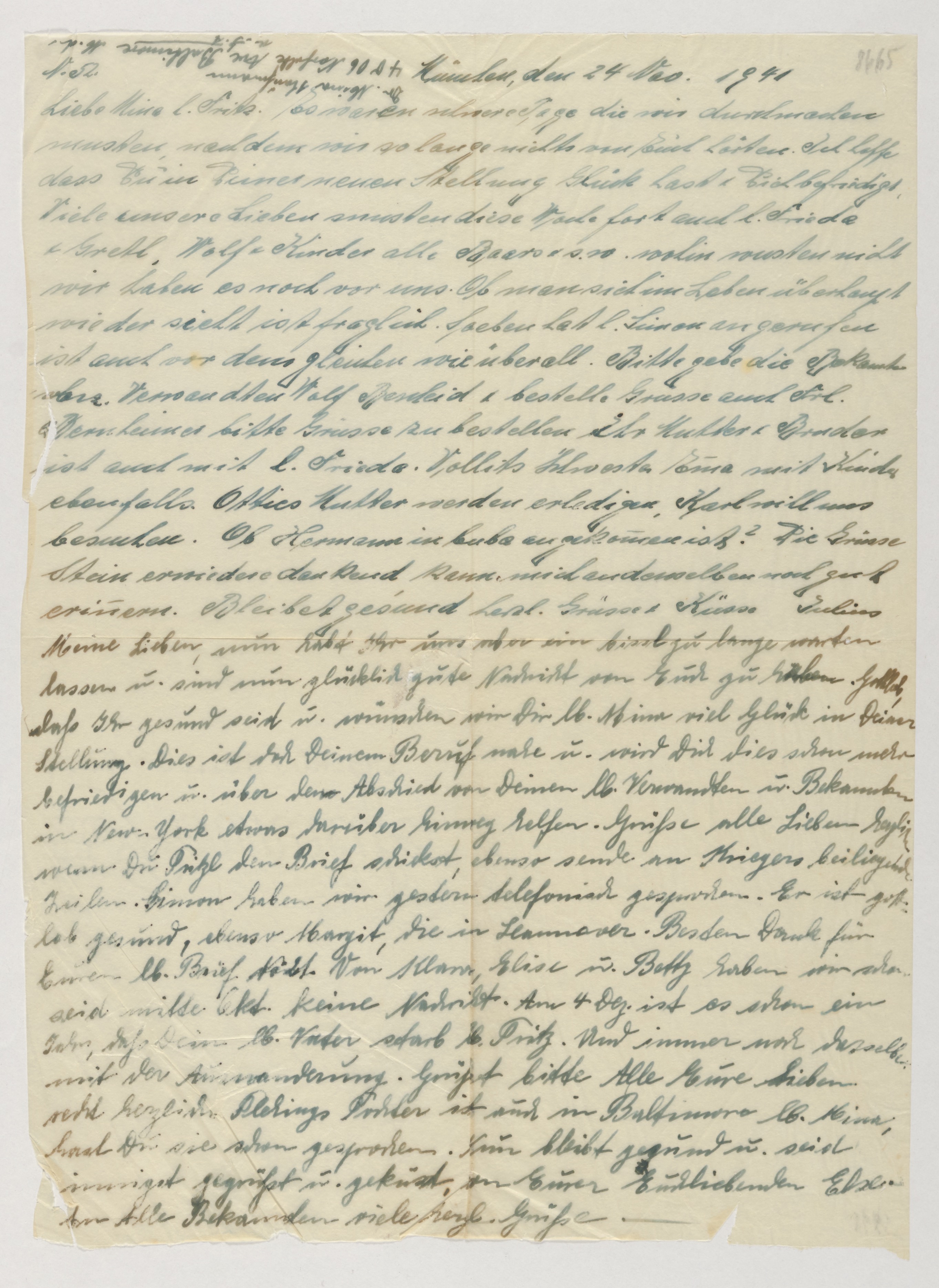
München den 20. Nov. 1941
Liebe Mina u. Leute [?]. In [?] den [?] erinnern [?] ja, die wie [?] Amerikaner menschenlos wunderbares machten wie es längst wollte aus und Lieben [?] nach [?] ihr [?] unsere Mannen [?] Stolz und [?] Gefühliges [?] ...
Seite um ein Lieben dorthin [?] aber ganz Los und Lieder u. Herren [?] dass [?] Alles ebenfalls Altes Kalles wechsler erleben. [?] nochmals wir wollen Besuchen. Es Kommunen in habe [?] [?] [?] [?]. Für Freuen Schein Verleiher das Band Reise [?] und [?] und bekam [?] wird u. verschwand [?]. [?] ist [?] gesandt dass [?] [?] uns [?] ... [?] ... Alle [?] und ... Margit die [?] Hammer u. Freden [?] und Ib. [?] Treiben [?]... komme [?] meines [?] Stuken [?] in [?] auf [?] gern [?] frei 10 [?] Hilfe. Von Allein [?] Klose [?] in Betty [?] kamen in [?] bin ich wollte [?] keine Antwort [?] u. [?] ist so schon ein Alter [?] Mina, Dr. [?] oder Ernst D. [?]. Von immer nach Briefe mit der Auswanderung. Grüsst bitte Alle [?] herzl. Seiten... noch [?] trefflich [?] und in Baltimore. G. Mina, hat [?] sie alles gebrochen. Von Welt [?] u. bitte [?] gesagt [?] gefunden u. [?] an [?] Konfidentstellen [?] alle [?] Verwandten viele [?] Grüsse. —
Written on November 20, 1941, this is one of the very last letters that could have been sent from Munich to America. The first mass deportation from Munich took place on November 20, 1941 — the very date of this letter — when approximately 1,000 Jews were deported to Kaunas (Kovno), Lithuania, where most were murdered upon arrival on November 25, 1941. Whether Julius and Elsa were on this transport or a later one requires further research. The United States declared war on Germany on December 11, 1941, ending all direct postal communication. This letter may represent one of the Oppenheimers' final communications with their American relatives.
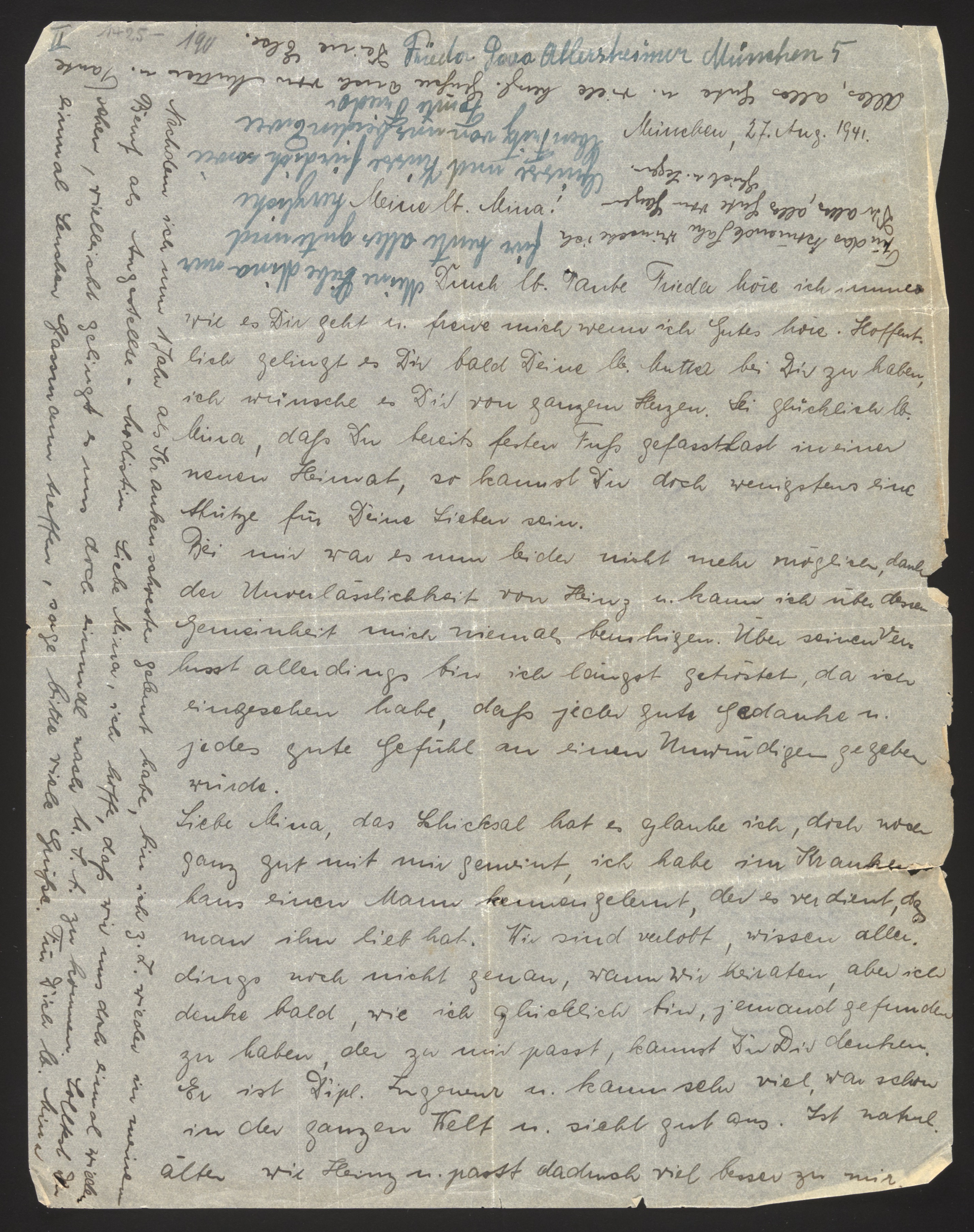
Handwritten letter in German Kurrent script, written upside-down on page (rot...
21.12.1941
Transcribed
Munich, December 21, 1941
[Sender identification:] Frida Sara Oppenheimer, Munich 5
Dear Mina! [The letter appears to be from Frida (Sara) Oppenheimer, not directly from Julius and Elsa, though filed with their correspondence.]
...I always hear from Aunt Frieda that you are doing well, and I am glad... I hope you will soon have the joy... I wish it for you with all my heart... that you unfortunately [had to] find yourself in a new homeland, but at least you do not need to worry about...
For me it was unfortunately no longer possible... the community... I should [report] some news... I have long since realized that good thoughts and good feelings would be wasted on an unworthy person.
Dear Mina, fate has, I believe, taken quite good care of me. I met a man through the Wanderbund [hiking association]... [Discussion of personal relationship]... You yourself don't yet know exactly when further [news]... but I think soon...
München, 21. Dez. 1941
[?] Frida Sara Oppenheimer München 5 [?]
[Text written upside-down and in margins, partially legible:]
... [?] von allem Guten [?] schöne Nachricht ...
Liebe lb. Mina! — hab [?] [?] [?] [?] [?]
[?] dass aus der [?] ...
Für alle Grüsse u. Tante Frieda höre ich immer wie es Dir gut geh! u. freue mich, wenn es Euch die Mutter [?] ... Hoffnung [?] hat gelangt es Dir bald Freude in halten [?] Dir zu halten ich wünsche es Dir von ganzen Herzen die gleiche [?] Mina, dass Du leider [?] euch geforschen hat in einen neuen Heimat, so brauchst Du doch wenigstens keine Abhilge für Deine Leuter [?] sein.
Du mir war es mir leider nicht mehr möglich, dass die Unvorständlichkeit von Deine u. kann ich [?] mit der Gemeinschaft muss mir einmal [?] Nachrichten. Alle eventuellen [?] allerdings bin ich längst [?] da [?] eingesehen habe, dass gleich gute Gedanke u. jedes gute Gefühl an einem Unwürdigen gegeben würde.
Liebe Mina, das Schicksal hat es [?] glaube ich, [?] war ganz gut mit mir gesorgt, ich habe am Wanderbund eine einen Mann kennen gelernt, dass es wirklich [?] was man alles hat [?]. Du mir selbst, wissen aller dings wird nicht genau, wann Dir weiteres, aber ich denke bald, wie ich gleichwohl [?], [?] gebraucht ge funden [?] halten, der so mir gross, damit Du dies [?] Menschen. [?] ist viel Rapt. [?] zu hören sehr viel, die Frau in der ganzen Welt u. nicht gut [?]. [?] ich nehme alle [?] [?] es geht [?] mit brauen u. [?]
This letter, dated December 21, 1941, was written just weeks after the United States entered WWII (December 7-11, 1941) and during the month when the first mass deportations from Munich began. The use of the mandatory middle name "Sara" (required for Jewish women since 1939) identifies the writer as Jewish. The letter appears to be from Frida Sara Oppenheimer, discussing personal matters including a new relationship. By this date, direct mail between Germany and the USA had effectively ceased due to the declaration of war. This may be among the last letters to reach America from this branch of the family.
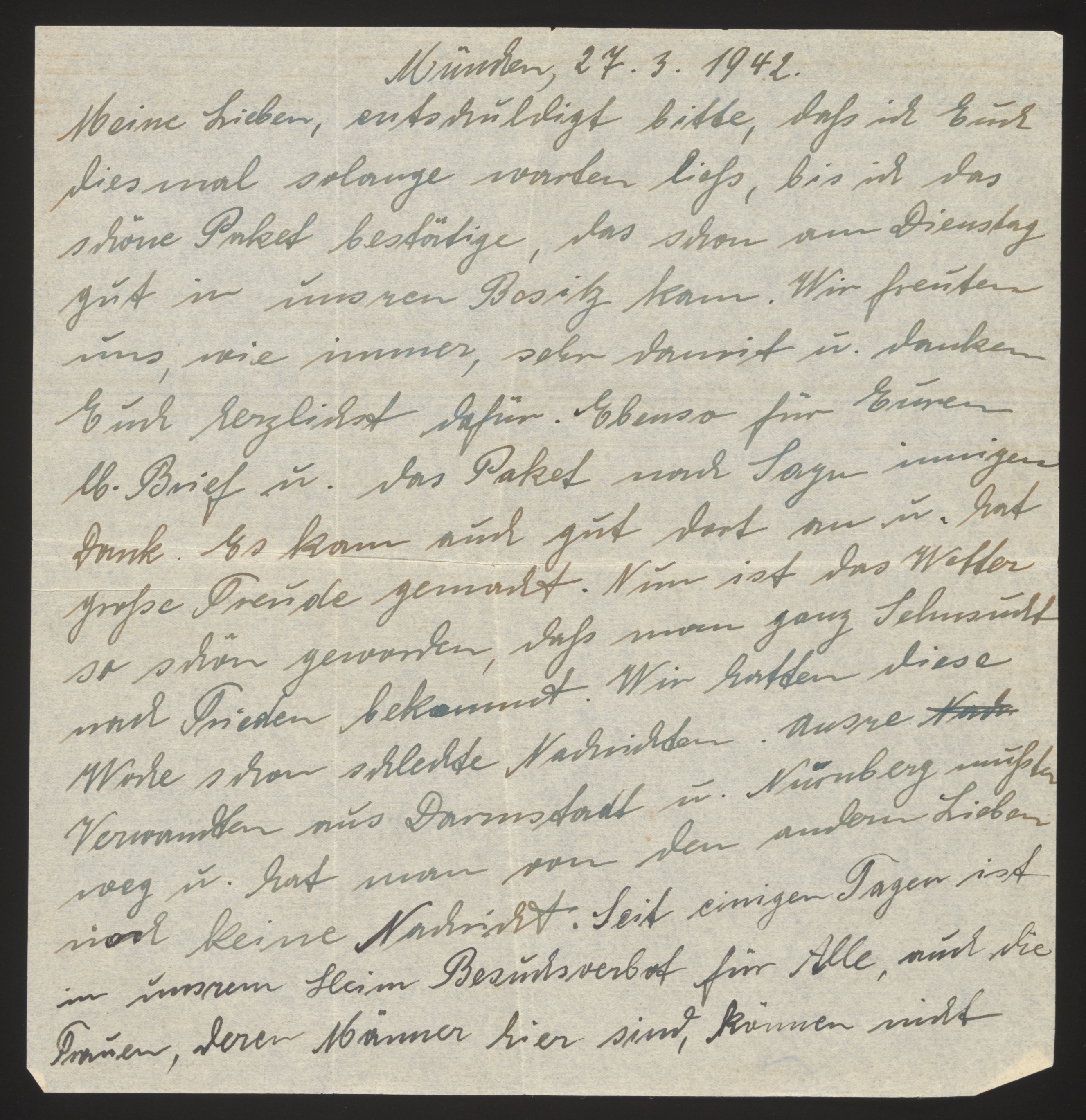
Handwritten letter (page 1 of 2)
27.03.1942
Transcribed
Munich, March 27, 1942.
My dear ones, please excuse me for making you wait so long this time before I confirm the beautiful package, which already arrived safely in our possession on Tuesday. We were, as always, very happy with it and thank you most warmly for it. Likewise for your dear letter and the package, [we] express heartfelt thanks. It also arrived in good condition and brought great joy. Now the weather has become so beautiful that one gets a great longing for peace. We already had bad news this week. Our [dear] aunt [and] relatives from Darmstadt and Nürnberg had to go away. One has no news at all from the other dear ones. For several days now there has been a district ban [Bezirksverbot] for everyone in the entire home — even the women whose husbands are here cannot
[continues on next page]
None
This letter contains critical historical testimony. The phrase "Verwandten aus Darmstadt u. Nürnberg müssten weg" ("relatives from Darmstadt and Nürnberg had to go away") is a direct reference to deportations — Jews from Darmstadt were deported to Piaski (in the Lublin district of occupied Poland) on March 25, 1942, just two days before this letter was written. The "Bezirksverbot" (district ban) refers to the increasingly severe movement restrictions imposed on Jews, confining them to their immediate area. The euphemistic language ("had to go away") reflects both the censorship of mail and the writers' own uncertainty about destinations. By this time, Julius and Elsa were likely confined to a "Judenhaus" (Jewish house) or similar communal living arrangement, as indicated by the reference to "im ganzen Heim" (in the entire home).
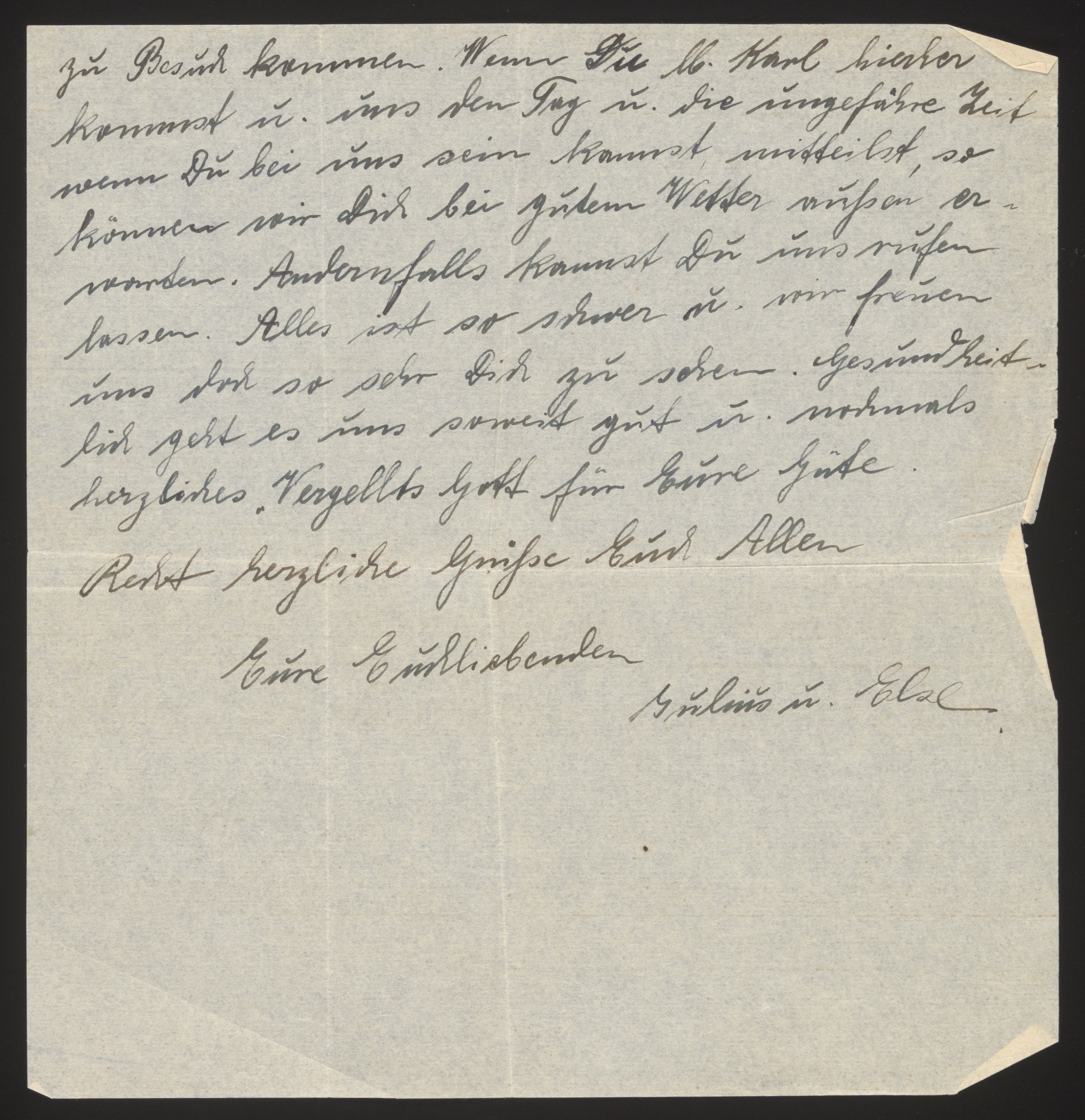
Handwritten letter (page 2 of 2, continuation of 0023)
27.03.1942
Transcribed
come to visit. If dear Karl comes here, and lets us know the day and approximate time when you can be with us, we can meet you outside in good weather. Otherwise, you can have us called. Everything is so difficult, and yet we are so very glad to see you well. Health-wise, we are doing fairly well, and once again a heartfelt "God reward you" for your gift.
Warmest greetings to you all,
Your loving
Julius and Elsa
None
This continuation reveals the severe restrictions on Julius and Elsa's daily life. They must be notified in advance of visits and can only meet visitors "outside" (draussen) — suggesting they are confined to a building and need special arrangements to receive guests. The "Bezirksverbot" (district ban) mentioned on the previous page means they cannot leave their designated area. Karl appears to be a relative still able to visit them in Munich. Despite everything, the letter maintains a tone of warmth and gratitude, closing with the deeply Bavarian expression "Vergelt's Gott" (May God reward you). This was written less than five months before their letter of July 18, 1942 (image 0022), after which no further correspondence appears in the collection.
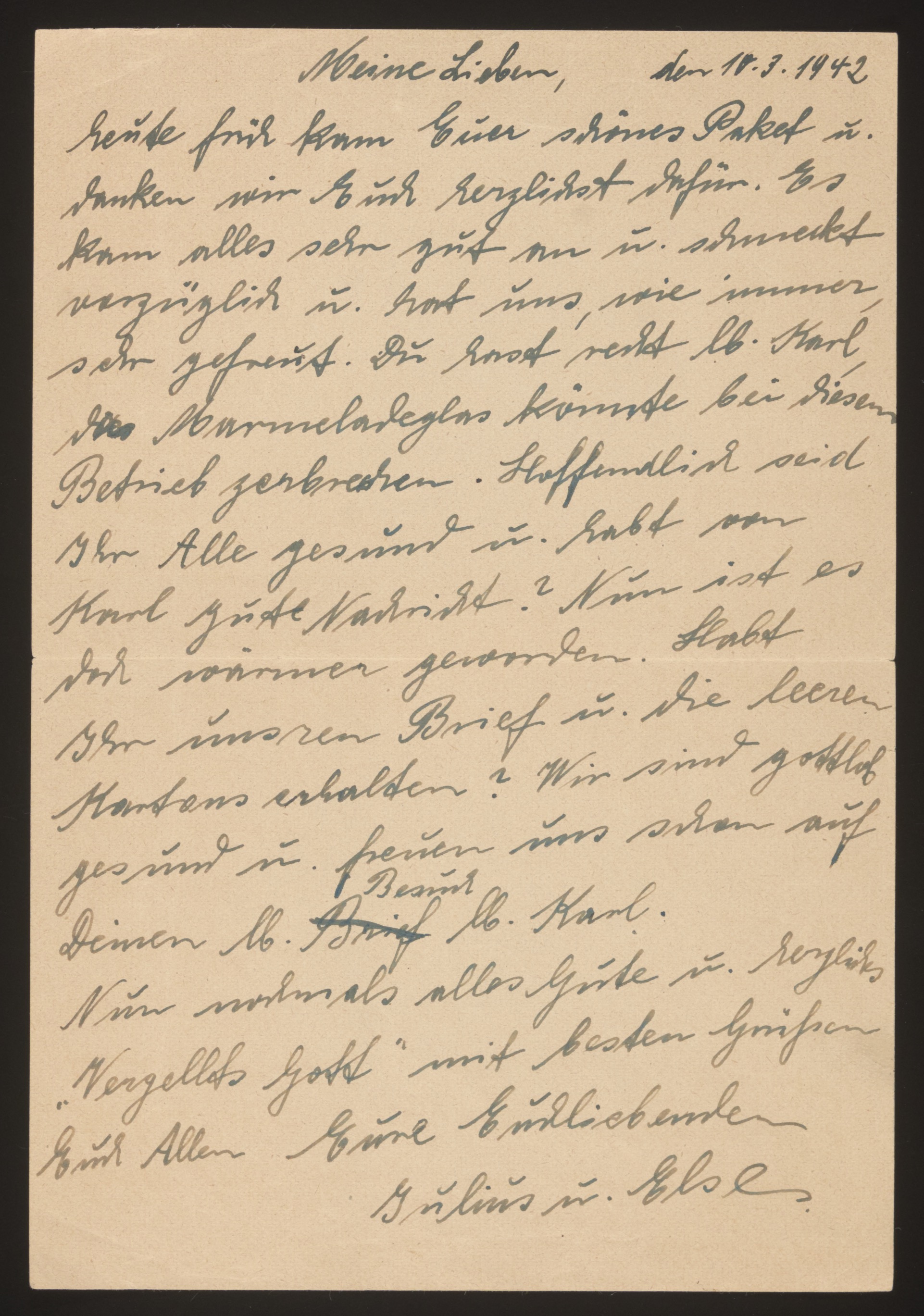
Handwritten short letter/note
18.07.1942
Transcribed
My dear ones, July 18, 1942
This morning your beautiful package arrived, and we thank you most warmly for it. Everything arrived in very good condition and tastes excellent, and it made us very happy, as always. You are right, dear Karl — the jam jar could [not survive] this shipping [process] without breaking. Hopefully you are all well and have good news from Karl? It has now gotten warmer. Did you receive our letter and the empty cartons? We are, thank God, healthy and already look forward to your dear letter, dear Karl.
Once again, all the best and may God reward you, with best greetings to all of you, your loving
Julius and Elsa
None
This brief but deeply poignant letter, dated July 18, 1942, is one of the latest documents in this collection. By this date, the systematic deportation and murder of Munich's Jews was well underway. The first deportation from Munich to Kaunas occurred on November 20, 1941, followed by transports to Piaski (April 1942), Theresienstadt, and Auschwitz. That Julius and Elsa were still able to write in July 1942 suggests they had not yet been deported. The letter's mundane discussion of packages, jam jars, and weather stands in stark contrast to the horror surrounding them. The phrase "Vergelt's Gott" (May God reward you) is a traditional Bavarian/Southern German expression of deep gratitude. This letter represents the Oppenheimers clinging to normalcy and family connection in the face of impending catastrophe.
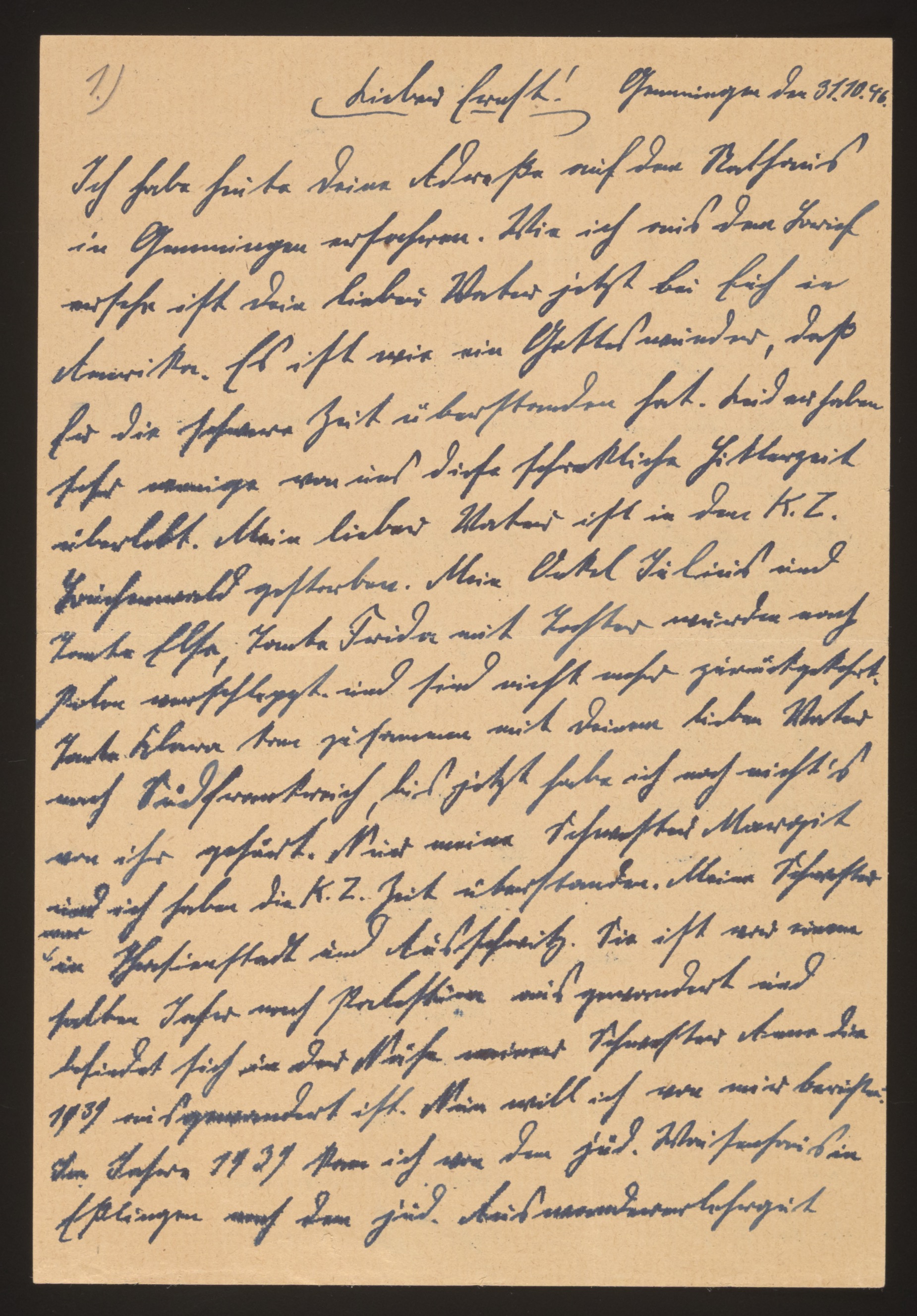
Handwritten letter to cousin — family fate (page 1 of 3)
30.10.1946
Transcribed
1)
Dear Cousin! Gemmingen, October 30, 1946
I found your address earlier at the town hall in Gemmingen. As I begin this letter -- your dear mother is after all in America. It is a miracle from God to me that you survived the terrible times. But very few of us survived this dreadful catastrophe. My dear father died in KZ Buchenwald concentration camp. My Uncle Julius and Aunt Elsa, Aunt Frieda and their children were deported and never returned. Aunt Klara was together with your dear father at Burkenbrausch [?] and I went to look for many things. Only my sister Margrit [Margit] and I survived the concentration camp period. My sister worked as a gardener and in a wood factory. She emigrated to Palestine half a year ago and is near a settlement that was established in 1939. Now I will report about myself: At the beginning of 1939, I was at the Jewish emigration training estate in Esslingen, then at the Jewish emigration training farm at
[continues on page 2]
1)
Liebe Cousine! Gemmingen den 30.10.46
Ich habe fruher Deine Adresse auf dem Rathaus in Gemmingen aufgefunden. Als ich mit dem Brief anfange, ich Deine liebe Mutter geht doch bis in Amerika. Es ist mir ein Gotterwunder, dass Du die schwere Zeit uberstanden hast. Doch auf haben sehr wenige von uns diese schreckliche Katastrophe uberlebt. Mein lieber Vater ist in dem K.Z. Buchenwald gestorben. Mein Onkel Julius und Tante Elsa, Tante Frieda und deren Kinder sind verschleppt und sind nicht mehr zuruckgekehrt. Tante Klara war zusammen mit Deinem lieben Vater nach Burkenbrausch [?] und gehe ich habe ich auf vieles [?] war es gespaht. Nur meine Schwester Margrit und ich haben die K.Z. Zeit uberstanden. Meine Schwester war ein Gartnerin und Holzfabrik. Sie ist von einem halben Jahre nach Palastina mit ausgewandert und befindet sich in der Nahe von einer Ortschaft nanntes [?] die 1939 mit zusammengebaut ist. Mein, will ich von mir berichten: Anfang 1939 war ich von den jud. Auswanderunglehrgut in Esslingen auf dem jud. Auswanderungslehrgut
This is the first page of a 3-page handwritten letter from Josef Oppenheimer, written on the same date as the typed letter (October 30, 1946) but apparently a more personal, detailed account. He provides crucial family information: his father Moses Oppenheimer died at KZ Buchenwald, Uncle Julius and Aunt Elsa Oppenheimer were deported and did not return, Aunt Frieda and her children were deported and did not return, Aunt Klara (Kaufmann, nee Oppenheimer) is mentioned in connection with the recipient's father. Only Josef and his sister Margit survived the camps. Margit had emigrated to Palestine about half a year before (around early 1946). Josef had been at Jewish emigration training farms (Hachshara) in Esslingen and then Grossbreesen near Breslau.
Photos
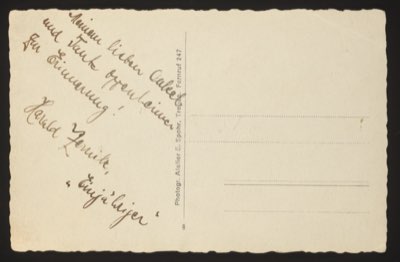
'To my dear Uncle and Aunt Oppenheimer' from Karl Zernik (baby photo, c.1920s) (c.1920s)
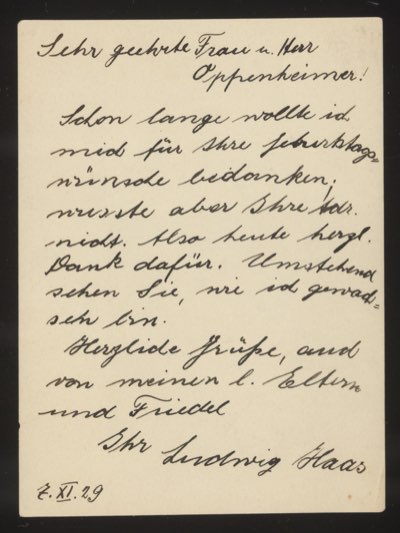
Letter from Ludwig Haas to 'Frau und Herr Oppenheimer', 2 November 1929 (1929-11-02)
Notes
Wife of Julius Isaak Oppenheimer
Josef's 1946 letter confirms deportation alongside Julius
Return address on envelopes: 'Elsa Sara Oppenheimer, München, Ainstr. 19/II' — mandatory middle name 'Sara' per 1938 decree.
Jan 14, 1941 letter to Kriegs family in New Jersey mentions relatives in Holland 'still healthy' — Holland occupied by Germany since May 1940.
Sources
Oppenheimer/Shacham Family ArchiveUSHMM Kaufmann Family Correspondence